News

Press Release Updates


Feb 24, 2026
Environment

Chairman Palmer Delivers Opening Statement at Subcommittee on Environment Hearing on Safe Drinking Water

WASHINGTON, D.C. – Congressman Gary Palmer (AL-06), Chairman of the Subcommittee on Environment, delivered the following opening statement at today’s hearing titled  From Source to Tap: A Hearing to Examine Challenges and Opportunities for Safe, Reliable, and Affordable Drinking Water. Subcommittee Chairman Palmer’s opening statement as prepared for delivery: “Good morning and welcome to Ranking Members Pallone and Tonko, my colleagues, and to our witnesses for this hearing of the Subcommittee on the Environment. “Today’s hearing provides a timely and important opportunity to examine the safety, reliability and affordability of our nation’s drinking water system. “For those you have been following the news in recent weeks, a sewer line in suburban Maryland ruptured in January and released more than 200 million gallons of untreated sewage into the Potomac River, which separates Maryland and D.C. from Virginia and is the main source of drinking water for millions of Americans and visitors to the national capital region. “The D.C. government just last week declared a state of emergency as a result of the sewage spill, and President Trump has directed the U.S. Environmental Protection Agency and the Federal Emergency Management Agency to take a lead role in coordinating the cleanup and response to this unfortunate incident.  “Given the significance of the spill and its potential impact on public health, interstate commerce, and drinking water and the environment in the nation’s capital region, this Committee has begun an investigation into what was known about the risks of this rupture and if it could have been avoided. “Local authorities say the drinking water supply has not been affected, and that the intakes at Great Falls are located upriver from the sewage spill and that the intakes at Little Falls have been closed. “DC Water was contacted but declined to testify at today’s hearing. “Congress first enacted the Safe Drinking Water Act more than 50 years ago and amended it several times since. One of the goals of this hearing is to hear how the law is working and what if anything needs to be modernized to address current challenges. “Many Americans receive their drinking water from publicly owned water utilities who have to navigate the law’s complicated regulatory requirements, manage both aging infrastructure and an aging workforce, and provide safe and affordable water to their customers.  “We will hear from two of these utilities today: Eric Hill, General Manager of the Russellville, Alabama Water & Sewer Board and Lindsey Rechtin, President & CEO of the Northern Kentucky Water District. “In recent years, Congress has appropriated EPA more than $1 billion annually for the Drinking Water State Revolving Loan Fund, an important source of infrastructure funding for states and local utilities. “However, as part of the Infrastructure Investment and Jobs Act, EPA received a supplemental appropriation of more than $50 billion for water infrastructure. I look forward to hearing from “EPA’s Deputy Inspector General about how EPA has been using that money and whether taxpayers have gotten what they paid for, or if these precious taxpayer funds are at risk. “We will also hear from a witness from the Natural Resources Defense Council with a background on water issues. “I thank the witnesses for their input and look forward to working with my colleagues on the Committee to identify commonsense solutions to protecting and modernizing our drinking water system . ”
Feb 23, 2026
Hearings

Energy and Commerce Weekly Look Ahead: The Week of February 23rd, 2026

WASHINGTON, D.C. – This week, the House Committee on Energy and Commerce is holding one Subcommittee Hearing. Read more below.  SUBCOMMITTEE HEARING: The Energy and Commerce Subcommittee on Environment is holding a hearing on safe drinking water. DATE: Tuesday, February 24, 2026  TIME: 10:15 AM ET  LOCATION: 2123 Rayburn House Office Building     ###


Feb 20, 2026
Environment

Chairmen Guthrie, Joyce, and Palmer Investigate Failure of DC Water to Address Potomac Sewage Spill

WASHINGTON, D.C. – Today, Congressman Brett Guthrie (KY-02), Chairman of the House Committee on Energy and Commerce, Congressman John Joyce, M.D. (PA-13), Chairman of the Subcommittee on Oversight and Investigations, and Congressman Gary Palmer (AL-06), Chairman of the Subcommittee on Environment sent a letter to David Gadis, the Chief Executive Officer of DC Water requesting information on the failures that led to the spill in the Potomac River and what steps are being taken to ensure it is contained. “The Committee has concerns about how this incident will impact public health, safe drinking water, the environment, interstate commerce, and tourism, all of which fall within the Committee’s jurisdiction,” said Chairmen Guthrie, Joyce, and Palmer. “DC Water is responsible for delivering drinking water and wastewater services to communities in Maryland, Virginia, and the District of Columbia (DC), as well as the federal government, including operation and maintenance of the 54-mile Potomac Interceptor line. The Committee is requesting documents and information from DC Water about what is already being referred to as ‘one of the largest sewage spills in U.S. history.’” Key excerpt from the letter: “Public health warnings have been given for people and pets to avoid contact with water from the Potomac River and to avoid fishing, rowing, and other activities in the area.The warnings to avoid the contaminated water come shortly before the annual Cherry Blossom Festival, which is centered around the Tidal Basin along the Potomac River, and the celebration of the 250th anniversary of the signing of the Declaration of Independence, both of which are expected to attract millions of visitors to the District of Columbia. “An incident of this size and scale presents a significant threat to the public health and welfare of the affected communities, and swift mitigation of these risks is critical. Understanding the nature of how this incident occurred and how future incidents of this scale may be prevented in the future is imperative.” CLICK HERE to read the full letter. BACKGROUND: The letter comes as Washington, DC, Virginia, and Maryland residents continue to deal with the fallout of the spill that occurred on January 19, 2026, and now has resulted in e. coli levels at the spill site measuring at hundreds of times above EPA safety thresholds. As part of its oversight authority, the Committee is requesting information on what DC Water knew about the risk of a potential spill prior to January, documents discussing why emergency contracting was warranted to repair the pipe, why any approved contracts were not implemented, as well as actions DC Water has taken to address the environmental impacts of the spill.


Feb 17, 2026
Environment

Chairmen Guthrie and Palmer Announce Hearing on Safe Drinking Water

WASHINGTON, D.C. – Congressman Brett Guthrie (KY-02), Chairman of the House Committee on Energy and Commerce, and Congressman Gary Palmer (AL-06), Chairman of the Subcommittee on Environment, announced a hearing titled From Source to Tap: A Hearing to Examine Challenges and Opportunities for Safe, Reliable, and Affordable Drinking Water . “Every American deserves access to safe, reliable, and affordable drinking water. Yet, failing infrastructure creates the potential threat of contamination in the safe drinking water that American families rely on, putting the health and safety of our communities at risk,” said Chairmen Guthrie and Palmer. “This hearing will examine the current state of our nationwide drinking water infrastructure, how the Safe Drinking Water Act is being implemented, and the security of our water systems against cyber threats and other risks to ensure our communities are being served effectively.” Subcommittee on Environment hearing titled From Source to Tap: A Hearing to Examine Challenges and Opportunities for Safe, Reliable, and Affordable Drinking Water . WHAT: Subcommittee on Environment hearing on safe drinking water. DATE: Tuesday, February 24, 2026     TIME: 10:15 AM ET LOCATION: 2123 Rayburn House Office Building  This notice is at the direction of the Chairman. The hearing will be open to the public and press and will be live streamed online at  energycommerce.house.gov . If you have any questions concerning the hearing, please contact Seth Ricketts with the Committee staff at Seth.Ricketts@mail.house.gov . If you have any press-related questions, please contact Ben Mullany at  Ben.Mullany@mail.house.gov .


Feb 12, 2026
Blog

HHS OIG Found Hundreds of Millions in Medicaid Payments for Deceased Individuals in a 2021 Audit. Republicans are Continuing to Crack Down on Waste, Fraud, and Abuse.

WASHINGTON, D.C. - Last December, the Department of Health and Human Services (HHS) Office of Inspector General (OIG) released a report showing that since 2016, OIG has conducted 18 audits, which revealed Medicaid agencies improperly paid states nearly $289 million on behalf of deceased enrollees. The audit outlined in HHS OIG’s report was conducted from July 1, 2021, through June 30, 2022. After reviewing a stratified random sample of 100 capitation payments from the nearly 410,000 capitation payments covered by the audit, HHS OIG found that Medicaid agencies paid for deceased individuals in 99 of the 100 sample capitation payments. During that same one-year period, Medicaid paid over $207 million to insurance companies for people who had already died. This is far from the first accounting of massive fraud found in our federal health programs. In July of 2025, the Centers for Medicare & Medicaid (CMS) announced that they had identified and were removing 2.8 million duplicative enrollees in two or more Medicaid and/or Affordable Care Act (ACA) exchange plans after conducting an analysis of 2024 enrollment data. In September of 2025, the Congressional Budget Office (CBO) found that Democrat policies have facilitated a years-long, massive cover-up to defraud American taxpayers in order to subsidize waste, fraud, and abuse in federal health programs, including using loopholes to provide free health care to illegal immigrants. The agency found that Democrat policies have led to at least 2.3 million fraudulent enrollees in Obamacare. And most recently, in December, GAO conducted covert operations by creating fictitious identities with fake or never issued Social Security numbers (SSN) and still received taxpayer-subsidized Obamacare coverage. One hundred percent of fake applicants were approved by the ACA Marketplace in late 2024 and 90 percent of fake applicants received coverage in 2025. Experts estimate the federal government may be spending as much as $27 billion a year in taxpayer dollars on improper Obamacare enrollments. Thanks to President Trump’s Working Families Tax Cuts signed into law on Independence Day last year, Republicans implemented commonsense guardrails to protect Americans and crack down on the Democrat-enabled waste, fraud, and abuse pervading our health care system. Our law takes action to remove duplicative and deceased enrollees from the Medicaid rolls and prohibit states from paying multiple managed care organizations for wasteful, duplicative health care coverage. We believe that taxpayer dollars should be used to benefit our most vulnerable Americans. To that end, the Committee has sent letters to state and federal officials requesting additional information on Medicare and Medicaid fraud. For example, the Committee opened an investigation into the massive fraud schemes in Minnesota's Medicaid programs; and just last week, our Subcommittee on Oversight and Investigations held a hearing exploring the egregious Medicare and Medicaid fraud schemes that are happening nationwide. Over the past several years, Democrat Administrations have allowed waste, fraud, and abuse across the American health care system to explode, ultimately driving up costs, hurting American families, and draining taxpayer dollars. Republicans are committed to finding solutions that restore affordability, fairness, accountability, and the rule of law across our health care system. Read the full report here .


Feb 11, 2026
Press Release

Health Subcommittee Examines Prescription Drug Supply Chain to Lower Costs for American Patients

WASHINGTON, D.C. – Today, Congressman Morgan Griffith (VA-09), Chairman of the Subcommittee on Health, led a hearing titled Lowering Health Care Costs for All Americans: An Examination of the Prescription Drug Supply Chain, featuring witness testimony from representatives across the entire prescription drug supply chain.

“I’m proud of this subcommittee’s work, but there is still more to be done—which is why I was proud to continue building on our affordability series through today’s hearing with representatives across the entire prescription drug supply chain,” said Chairman Griffith. “Hearing from these witnesses on how to best navigate this complex web helps Congress make better-informed policy decisions so that we are able to meaningfully lower the cost of care for all American patients.”

Watch the full hearing here:

Below are key excerpts from today’s hearing:

BV8A3493 copy.JPG

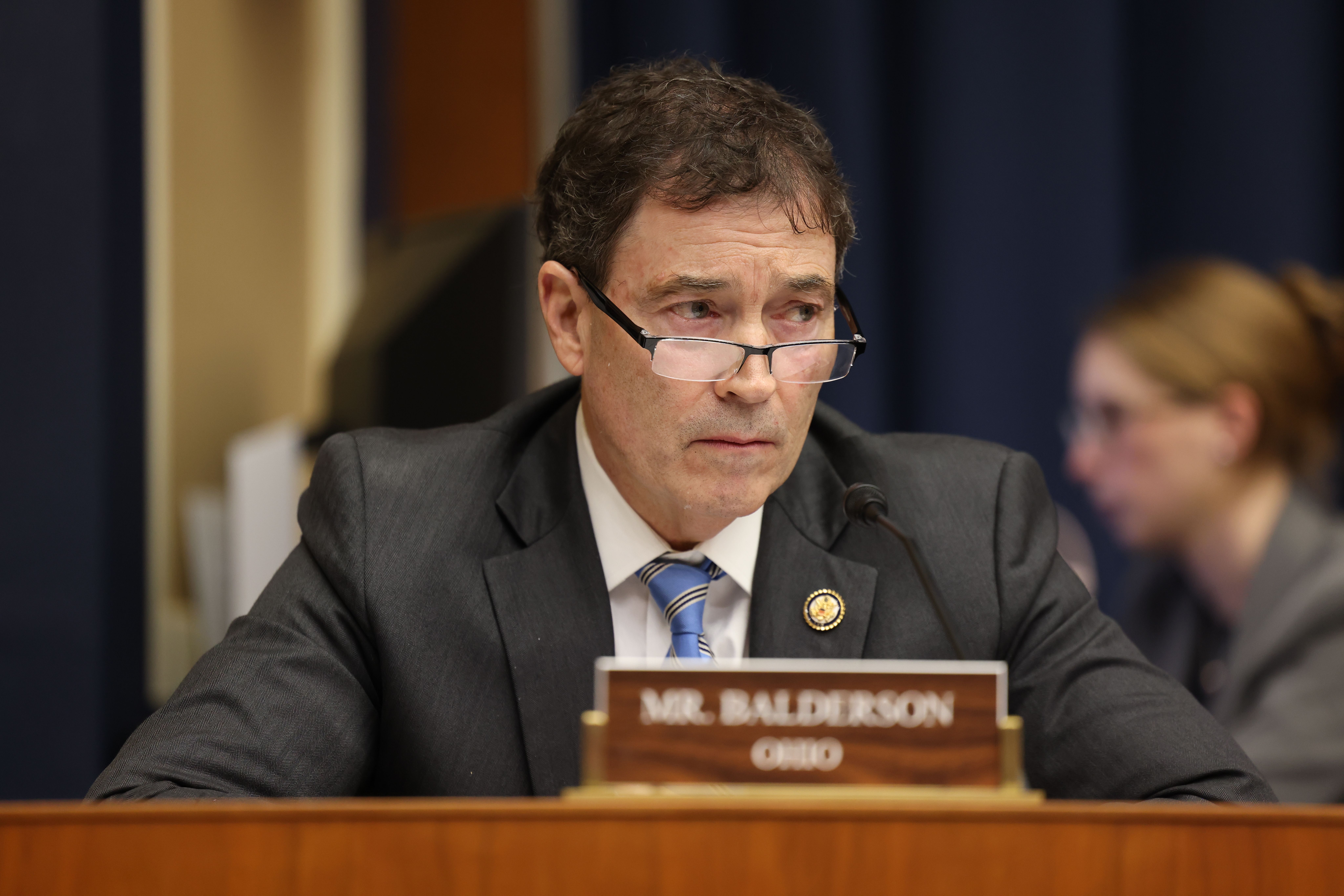
Congressman Troy Balderson (OH-12): “I represent a very rural district, and not only is access to health care a problem, but access to pharmacy services is growing more challenging as well. A 2025 FTC report examined PBM pharmacy contracting practices and found that internal PBM documents suggested rural pharmacies are often forced to accept ‘take it or leave it’ reimbursement rates. Could you elaborate on the specific challenges rural pharmacies face when negotiating contracts with PBMs, and how these practices may affect access to care in rural communities?” Mr. Hoey: “‘Take it or leave it’ contracts are part and parcel of the so-called negotiations between pharmacies and PBMs. PBMs hold all the leverage. They hold the patient lives. So, if a pharmacy does not sign whatever is put in front of them—with very little negotiation—I’m sure our friends at PMA will say there’s robust negotiation, but in reality, it’s a take-it-or-leave-it contract. These pharmacies are often forced to sign contracts that pay them below their cost to acquire the drug. And yes, rural pharmacies, as well as pharmacies in underserved areas, urban areas, and suburban communities, are all taking contracts in which they are paid below cost. As a result, 5,000 pharmacies have gone out of business in the last four years alone. That’s 5,000 fewer pharmacy choices in just four years. It’s a systemic problem. In fact, pharmacy deserts—especially in your district in Ohio and across the country—are growing because of these ‘take it or leave it’ contracts.”

BV8A3761 copy.JPG


Congresswoman Kat Cammack (FL-03):Three companies control the majority of drug distribution in the United States, and many are vertically integrated to control each phase of the prescription drug supply chain—from manufacturer to pharmacy. Does consolidating the prescription drug industry lower prices for patients? Yes or no?” Mr. Davis: “It has the potential to, yes.” Congresswoman Kat Cammack: “Respectfully, your own industry report projects that the ‘big three’ will generate $871 billion in revenue this year—after four straight years of double-digit growth. So, if this is potentially saving patients money, why are revenues growing so fast, and where are patients seeing the savings?”

BV8A3822 copy.JPG


Congressman Michael Rulli (OH-06): “President Trump recently launched TrumpRx, a revolutionary platform aimed at bringing price transparency and competition back to the drug market. My constituents tell me every day about how much they dread going to the pharmacy because they never know what price they’re going to pay at the counter; it always changes. Then, you have brand-name versus [generic]... How have your members reacted to the transparent pricing of brand-name [drugs] on TrumpRx?” Mr. Marin: “The PBM industry is all about transparency. We are enhancing it for our customers every day, particularly for employers. The bill Congress passed a couple of weeks ago takes [transparency] to another level—we’re happy with that. We support and applaud the mission of the administration’s goal with TrumpRx.”


Feb 11, 2026
Press Release

Chairman Griffith Delivers Opening Statement at Subcommittee on Health Hearing Inviting Representatives of Our Prescription Drug Supply Chain

WASHINGTON, D.C. – Congressman Morgan Griffith (VA-09), Chairman of the Subcommittee on Health, delivered the following opening statement at today’s hearing titled Lowering Health Care Costs for All Americans: An Examination of the Prescription Drug Supply Chain.

Subcommittee Chairman Griffith’s opening statement as prepared for delivery:

“First, I want to recognize the bipartisan bill that we were able to pass last week that included many important health care provisions and lowered health care costs for all Americans.

“Today, we will discuss health care costs and patient access challenges by examining affordability across the entire pharmaceutical supply chain.

“I’m proud of this subcommittee’s work, but there is still more to be done, which is why I am eager to continue building on our affordability series with today’s hearing that comes after we heard from insurance executives last month.

“We now will hear from stakeholders who are part of the complex pharmaceutical drug supply chain.

“To regular people, this system may seem simple: a disease is researched and a treatment is developed, then that treatment is manufactured and distributed to a hospital, pharmacy, or other health entity before it is dispensed to a patient.

“However, there are many more layers that are involved in this process that affect how a drug gets to a patient and how that drug is priced.

“One of the most frustrating aspects of the supply chain is that it operates in a blackbox.

“Luckily, we have witnesses here to provide their perspectives and shine a light on the process.

“Do each of these entities in front of us today play a role in getting the drug to a patient? Yes.

“Are there too many cooks in the kitchen at times? Probably so.

“Today is a great opportunity for Congress to get a glimpse and see what is happening, and look for ways to help make prescription drugs more affordable.

“In 2017, this same subcommittee held a hearing similar to this one.

“A lot has changed since then.

“I am glad we are reexamining what we learned from that hearing to continue working towards what we all want: lowering costs for patients while ensuring that America remains a leader in pharmaceutical innovation.

“We have PhRMA and BIO in front of us who can speak to the intricacies that go into researching, developing, and pricing a drug on the market.

“We will also get the perspective of generic drugs from the Association for Accessible Medicines who can speak on the issues in that area.

“We also have the Pharmaceutical Care Management Association here who is the trade association that represents pharmaceutical benefit managers, or PBMs.

“In theory, PBMs manage prescription drug benefits for insurance companies, employers, and others.

“What we heard in our hearing last month is that insurance companies own many PBMs.

“The largest three insurance owned PBMs control over 80 percent of the market.

“How they manage these benefits is a mystery and can lead to higher drug prices.

“However, just last week, led by Representative Buddy Carter from Georgia, Congress passed and the President signed into law the biggest PBM reform package in history.

“These bills will bring more transparency into this system, lower costs, and allow for more access to medicines.

“The Healthcare Supply Chain Association is here on behalf of Group Purchasing Organizations, or GPOs, which act as intermediaries between manufacturers and providers.

“In front of us is also the Healthcare Distribution Alliance, who is involved in the distribution of prescription drugs along the supply chain.

“I am looking forward to hearing from the National Community Pharmacists Association who is before us today as well, since they represent community pharmacists.

“These community pharmacies serve a critical role in bringing care to patients, especially in rural areas; yet, many have had to sadly close their doors in recent years due to factors we will discuss today.

“The ERISA Industry Committee is also here to discuss their point of view for employers when it comes to high costs, as well as decisions they make based on those costs.

“Each of these different entities play a unique role in how a drug finally gets to a patient.

“In this meeting, we will hear from these witnesses on how to navigate this complex web on behalf of the American people.

“I look forward to the discussion.”


Feb 11, 2026
Energy

House Passes Energy and Commerce Legislation to Secure American Energy Supply Chains

WASHINGTON, D.C. – Today, Congressman Brett Guthrie (KY-02), Chairman of the House Committee on Energy and Commerce, and Congressman John James (MI-10) celebrated House passage of legislation advanced by the Committee on Energy and Commerce to strengthen America’s energy supply chains, reduce reliance on adversarial nations, and safeguard the resources essential to our economy and national security.

H.R. 3617, the Securing America’s Critical Minerals Supply Act, requires the Department of Energy to assess critical energy resource supply chains, including critical minerals and rare earth elements, and to strengthen supply chains that are vulnerable to disruption or overreliance on adversarial nations. By taking a holistic view of critical energy resources, the Department of Energy can identify vulnerabilities and address supply chain disruptions to help ensure Americans have access to affordable, reliable, and secure energy systems.

“Keeping our nation strong and secure means having access to reliable and affordable energy. Right now, the technologies that power our grid rely on critical minerals produced and controlled by adversarial nations,” said Chairman Guthrie. “To address this crucial issue, the House passed the Securing America’s Critical Minerals Supply Act, which strengthens the Department of Energy’s support for critical energy resource supply chains, which are vital to keeping the lights on for American families and powering U.S. industrial facilities. Thank you to Congressman James for his leadership on this important legislation.”

“This bill is a bold step toward ensuring the United States leads in energy innovation, security, and independence, and I’m thrilled to see it pass the House. We cannot be the ‘land of the free’ if we choose to rely on critical mineral supply chains that are dependent on child and slave labor,said Rep. James. “This is about unleashing American energy, powering our factories, fueling innovation, and securing our future. It’s a massive step towards building an energy-independent America and putting an end to overreliance on adversaries, dictators, and despots around the world.”

BACKGROUND:

Energy supplies are the linchpin to U.S. global leadership in next generation technologies and industries, job growth in communities across the country, and a robust defense industrial base.

Despite vast domestic natural resources, the United States remains heavily reliant on foreign adversaries for critical energy resources that are essential to our economic and national security:

  • The U.S. is 100 percent reliant on imports for 16 critical minerals and 50 percent import reliant on an additional 50 vital mineral commodities;
  • China maintains 60 percent of the world’s production of rare earth elements and 90 percent of their global processing capacity.

In recent years, adversarial nations like China have sought to exploit U.S. vulnerabilities, issuing export bans on key minerals, materials, and resources that are essential to both our manufacturing and defense industry.


Chairman Hudson Delivers Opening Statement at Subcommittee on Communications and Technology Markup of a Bill to Reauthorize FirstNet

WASHINGTON, D.C. – Congressman Richard Hudson (NC-09), Chairman of the Subcommittee on Communications and Technology, delivered the following opening statement at today’s markup of a bill to reauthorize FirstNet.

Subcommittee Chairman Hudson’s opening statement as prepared for delivery:

“Good morning, and welcome to today’s subcommittee markup on the First Responder Network Authority Reauthorization Act. I’m excited about our progress and taking this next step towards reauthorizing this important program.

“Last week we heard from a great panel of witnesses who shared their expertise and experience with FirstNet and provided input on how this legislation would improve the network and ensure it operates in the best interest of public safety.

“We heard directly from NTIA that not only is the FirstNet Board protected in statute, but they have no intention of dismantling or casting aside the FirstNet Board. It’s actually quite the opposite. NTIA relies on the Board to provide crucial expertise and direction on the needs of public safety. This legislation not only keeps the Board, but strengthens public safety’s voice by requiring 2 additional seats on the Board be dedicated to public safety.

“I want to note this vote today does not signify we’re done working on this legislation. We are continuing to gather feedback from public safety groups and stakeholders about certain provisions in this legislation, and we have a lot of work in the coming weeks to ensure that this bill is the best possible version it can be before it reaches the House floor.

“Reliable communications are absolutely essential for our first responders in emergencies. While a lot has been done to stand up this first-of-its-kind public safety communications network, there is more work to do to ensure the promise of FirstNet is fulfilled. In my home state of North Carolina, first responders have shared their frustrations about FirstNet not working during Hurricane Helene. The reforms included in the legislation before us today are intended to ensure that FirstNet delivers a reliable, interoperable communications network to our first responders and the FirstNet Authority acts in the best interests of the public safety community it serves.

“I want to thank my colleagues for their continued commitment to this issue and for their work developing this proposal. I look forward to reauthorizing the First Responder Network Authority.”