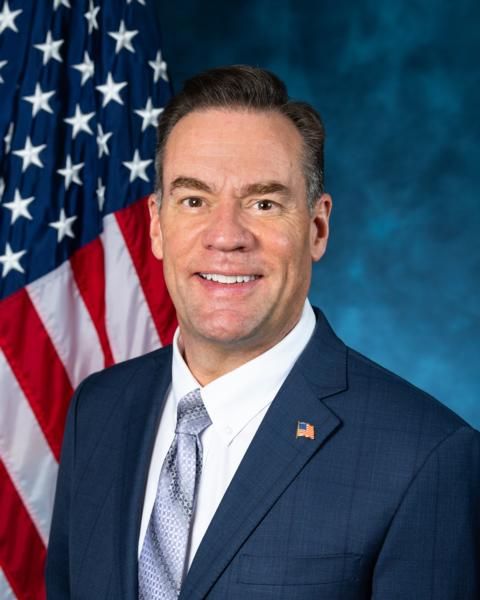
Rep. Russ Fulcher

R

Idaho – District 1

Leadership

Vice Chairman Commerce, Manufacturing, and Trade

119th Congress

News & Announcements


Feb 3, 2026
Hearings

O&I Subcommittee Holds Hearing on Ongoing Fraud in Medicare and Medicaid Programs

WASHINGTON, D.C. – Today, Congressman John Joyce, M.D. (PA-13), Chairman of the Subcommittee on Oversight and Investigations, led a hearing titled Common Schemes, Real Harm: Examining Fraud in Medicare and Medicaid.

“What’s happening in Minnesota’s Medicaid program is deeply concerning and requires robust Congressional oversight; however, it is just the tip of the iceberg,” said Chairman Joyce. “Medicare and Medicaid fraud has been occurring in communities across the U.S. for decades, diverting necessary resources from patients in need. It is our duty to protect these programs for our most vulnerable Americans.”

Watch the full hearing here.

Below are key excerpts from today's hearing:

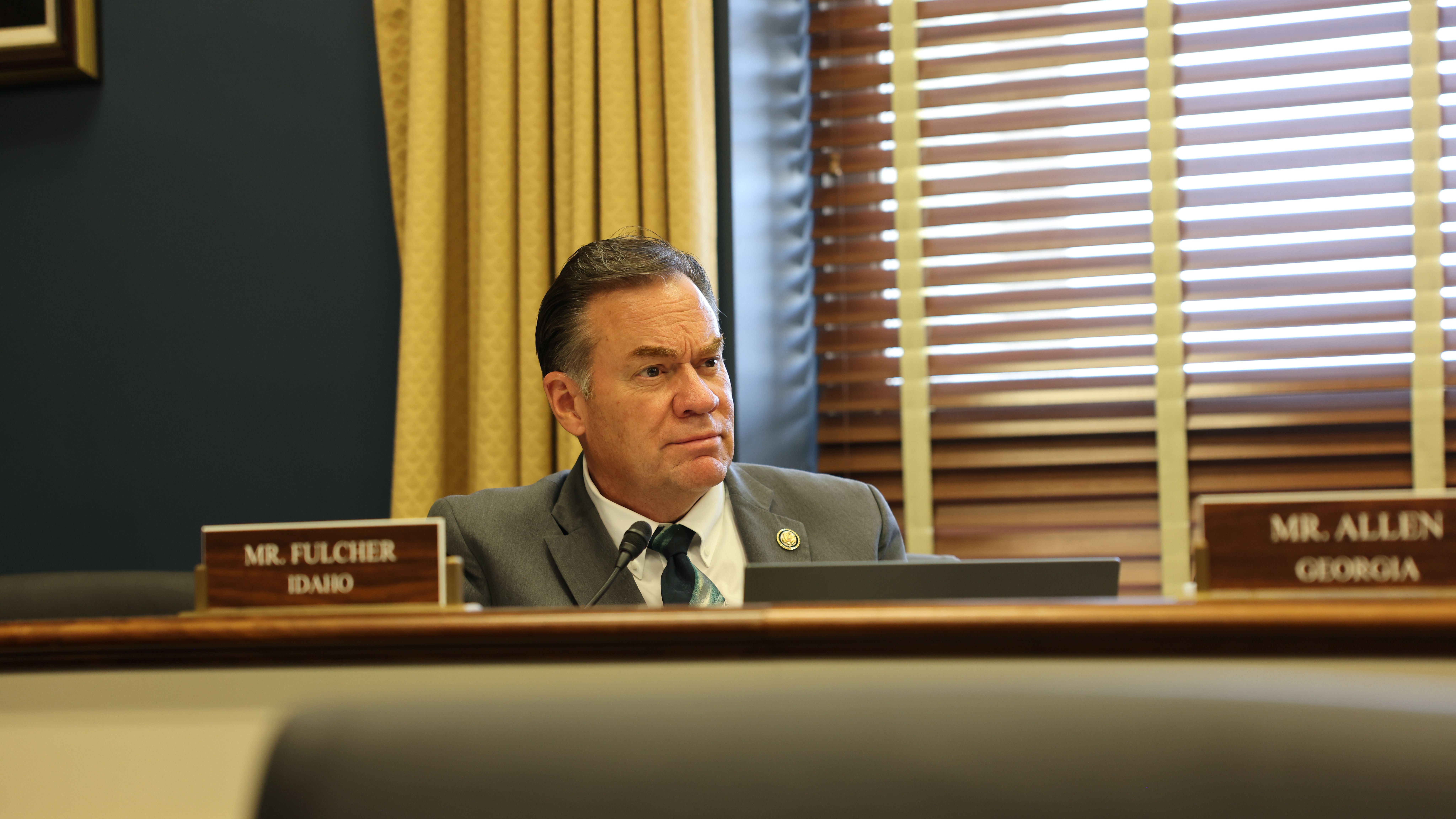
LH1A0870.JPG

Congressman Russ Fulcher (ID-01): “I’m from the state of Idaho—which, sometimes, may not be the first state you think about when there might be fraud, but that is kind of the basis of my question. Have you noticed any trends where states might get targeted or regions might get targeted as a function of potentially them having a lower barrier for entry, or maybe perceived as not being as likely to be audited?” Ms. Gay: “Absolutely. We talk a lot in the industry how [fraud] can be regionally generated. It tends to start in one particular area, and then I don’t know if they’re all hanging out, talking to each other, or how that spreads, but it does tend to start in certain populations and then branch out from there based on controls.” Mr. Fulcher: “What if the bad actor is a foreign actor? How much of that do you see? And if so, what kind of a challenge does that bring to potentially pursuing that fraud, if it’s perpetrated by a foreign actor?” Ms. Wooten: “Certainly, states have seen both fraud cases perpetrated by foreign and by U.S. citizens or people in the U.S., and from our perspective, as being a Medicaid Fraud Control Unit, it makes no difference. We look at allegations, try to identify whether there is something we can do about them? Is the dollar amount something we can pursue? Are we going to be able to get value back for the Medicaid program? Do we have the laws in place to prosecute whatever type of fraud is referred? And we move forward with that investigation.”

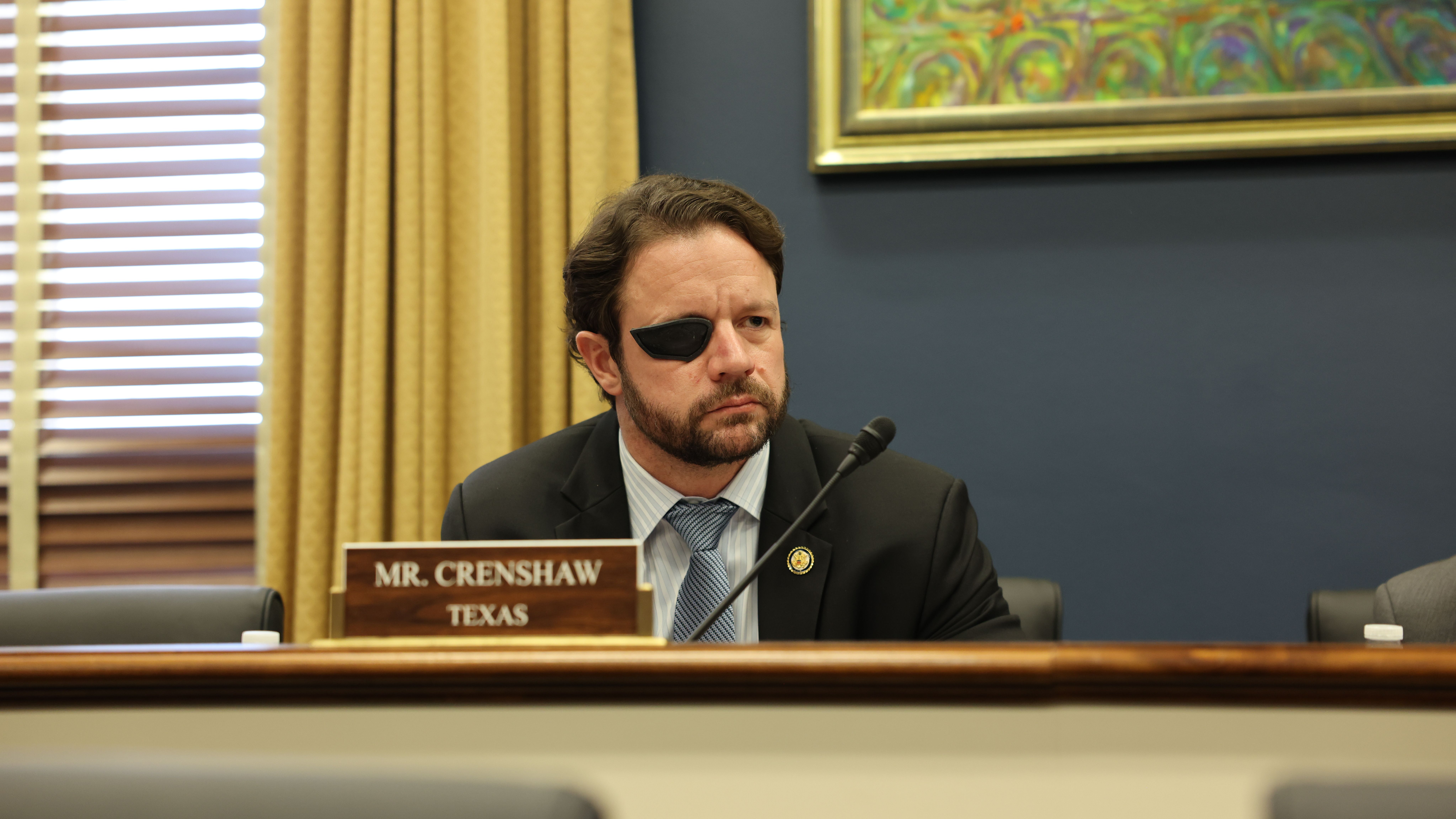
LH1A1035.JPG

Congressman Dan Crenshaw (TX-02): “So what’s the solution here? I mean, some argue stronger oversight would actually threaten access to care, but based on your experience, what actually happens to access when fraud is not controlled? Who bears the brunt of this?” Ms. Gay: “I think there’s certainly the patient-harm attribute you mentioned—you know, not getting the care that you need. […] We dealt with some cases with ACA enrollments, and by the time we verified with CMS that those were eligible recipients, the health plan was already on the hook for $1, $2, $3 million. Were these patients even receiving the care? In some cases, yes. In other cases, they had no idea that they were in a facility for such treatment. […] Now you have somebody that doesn’t even have that challenge, but that is now on their record. And even worse—those that do, that are getting subpar treatment at a very exorbitant rate and still not getting better.”

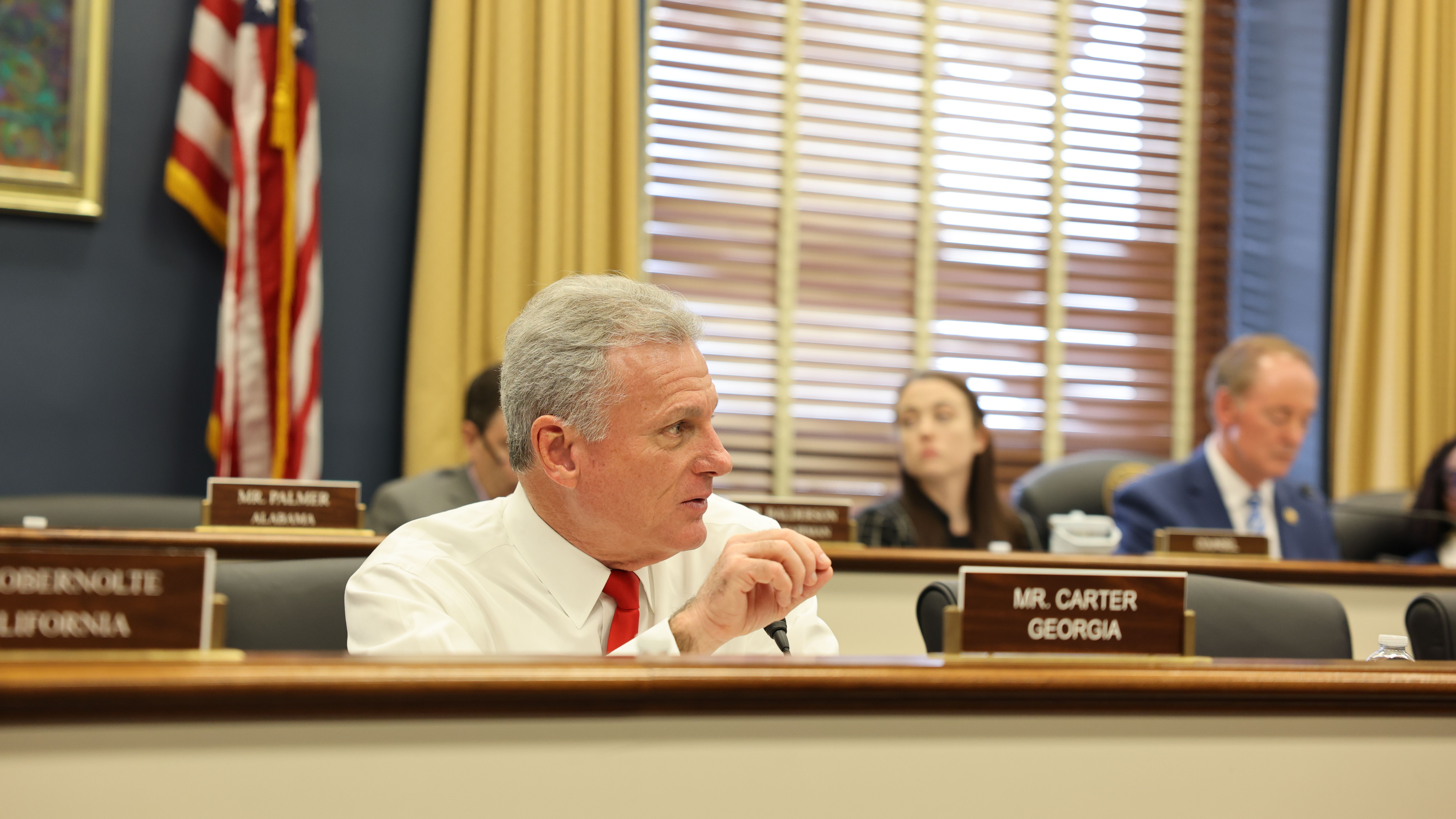
LH1A1129.JPG

Congressman Buddy Carter (GA-01): “Auditors found 112 hospice providers operating out of a single physical address. 112...holy cow. As a result, hospice agencies in LA County alone likely overbilled Medicare by $105 million in just one year. […] It looks like it’s a problem in a lot of different places. And that’s why I want to ask you, Ms. Wooten, have you seen instances of copycats where fraudsters see a successful fraud scheme happening in one location, so they try to replicate the same fraud elsewhere?” Ms. Wooten: “Absolutely. We definitely see replicated fraud schemes in hospices; an excellent example. I share your concerns about home health and hospice because I owned a home health agency for many years, and I didn’t even choose to be a hospice because there were specialized agencies that could handle that part, and we would refer to them under the right circumstances. What we now see, though—hospices who are admitting patients who are not terminally ill, patients who don’t know they were put on hospice, patients who maybe aren’t getting treatments that they need, because the hospice philosophy, as you know, is for comfort care, not for treating illnesses. We have seen the same thing in Utah that the hospices have exploded. Now, I’m not saying they’re all fraudulent either, but absolutely; fraudsters learn from fraudsters and it’s an area we have to investigate.”


O&I Subcommittee Holds Hearing on AI and Biotechnology

WASHINGTON, D.C. – Today, Congressman John Joyce, M.D. (PA-13), Chairman of the Subcommittee on Oversight and Investigations, led a hearing titled Examining Biosecurity at the Intersection of AI and Biology.

“As a physician, I must acknowledge the extraordinary promise that AI-enabled biotechnology holds for patient care. AI is accelerating drug discovery, improving protein modeling, and enabling the development of therapies with unprecedented precision,” said Chairman Joyce. “The Trump Administration has taken steps to keep up with such advancements, but the federal government must continue to carefully assess whether our current safeguards and reporting systems are adequate in an era of rapidly advancing AI technology.”

Watch the full hearing here

Below are key excerpts from today’s hearing:

BV8A5360.JPG

Congressman Dan Crenshaw (TX-02): “We've talked a lot about how AI can be used for all sorts of scary things. What about the good parts? What about assisting industry leaders and researchers in identifying biosecurity risks? In other words, you know, how can we use AI for good?” Mr. McKnight: “Thank you for the question. This builds on the conversation we were having about select agent lists and then the new incredible diversity of threats. The same way the biodesign tools that we're talking about can create new proteins and give lessons on how to create new medicines, those same tools can be turned around. [...] They can be turned around to automate the process of interpreting a sample that you're looking at, and then the development roadmap that is funded through these programs is to use AI to go from sequence detection to what the function is.”

BV8A5266.JPG

Congressman Russ Fulcher (ID-01): “In an attempt to try to close the door on this, President Trump had the executive order back in May. And looking at the gene synthesis, in the section of the President's EO of the gene synthesis section, can you say what specific parts of that order are actually going to stop these threats, or have the best chance of stopping these threats? Can they stop [those] threats if implemented? And, just a follow up, what else should we in Congress be doing about this?” Dr. Pannu: “Thank you for the question. Overall, I'm glad that you mentioned the executive order from May; I think that's an important initiative. There are a couple of things in that I would want to highlight: the gene synthesis provisions do call on Congress to proceed with a legislative effort to make gene synthesis screening mandatory across the U.S., that's something that Congress could advance. The other provisions on clearly defining what is dangerous gain of function research, those policies have yet to be released from the Office of Science and Technology Policy, so Congress could ask for an update as to those, and where they currently stand.”

BV8A5187.JPG

Congresswoman Diana Harshbarger (TN-01): “Are there early warning indicators—whether they're digital, biological or supply chain—that could help identify AI-enabled biological misuse? Because you talked about that digital to physical barrier.” Mr. McKnight: “Yes, one of the key capabilities that we work on is when you take a sample with Biothreat Radar from an airport, or from a community, or from a threat location, you bring it, you do DNA sequencing with it. […] We have a set of tools that we are constantly developing with cutting edge machine learning AI to analyze that DNA to tell you what’s in it, what different types of pathogens, are there new things that you haven’t seen? And one of the very specific tools that we work on that was developed in conjunction with IARPA […] is a tool that actually looks and algorithmically scores to identify if something has been genetically engineered or not.”


Dec 9, 2025
Press Release

Chairmen Guthrie and Bilirakis Announce CMT Subcommittee Markup of Online Safety Bills

WASHINGTON, D.C.  – Today, Congressman Brett Guthrie (KY-02), Chairman of the House Committee on Energy and Commerce, and Congressman Gus Bilirakis (FL-12), Chairman of the Subcommittee on Commerce, Manufacturing, and Trade, announced a subcommittee markup of 18 bills to protect children and teens online. WHAT : Subcommittee on Commerce, Manufacturing, and Trade markup of 18 bills. DATE: Thursday, December 11, 2025 TIME: 10:15 AM ET LOCATION: 2123 Rayburn House Office Building Items to be considered: H.R. 6290 , Safe Social Media Act (Reps. Bentz and Schrier) H.R. 6259 , No Fentanyl on Social Media Act (Reps. Evans and Dingell) H.R. 6289 , Promoting a Safe Internet for Minors Act (Reps. Lee-FL and Soto) H.R. 6437 , Kids Internet Safety Partnership Act (Reps. Fry and Landsman) H.R. 5360 , AI Warnings And Resources for Education (AWARE) Act (Reps. Houchin and Auchincloss) H.R. 6499 , Assessing Safety Tools for Parents and Minors Act (Reps. Fulcher and Landsman) H.R. 2657 , Sammy’s Law (Reps. Wasserman Schultz and Carter-GA) H.R. 6265 , Safer Guarding of Adolescents from Malicious Interactions on Network Games (GAMING) Act (Rep. Kean) H.R. 6273 , Stop Profiling Youth and (SPY) Kids Act (Rep. Miller-Meeks) H.R. 6253 , Algorithmic Choice and Transparency Act (Rep. Cammack) H.R. 6489 , Safeguarding Adolescents From Exploitative (SAFE) Bots Act (Rep. Houchin) H.R. 1623 , Shielding Children's Retinas from Egregious Exposure on the Net (SCREEN) Act (Rep. Miller-IL) H.R. 6257 , Safe Messaging for Kids Act of 2025 (Rep. Dunn) H.R. 3149 , App Store Accountability Act (Rep. James) H.R. 6333 , Parents Over Platforms Act (Reps. Auchincloss and Houchin) H.R. 6292 , Don’t Sell Kids’ Data Act of 2025 (Rep. Pallone) H.R. 6484 , Kids Online Safety Act (Rep. Bilirakis) H.R. 6291 , Children and Teens’ Online Privacy Protection Act (Reps. Walberg and Lee-FL) This notice is at the direction of the Chairman. The hearing will be open to the public and press and will be livestreamed online at energycommerce.house.gov . If you have any questions concerning this hearing, please contact Alex Khlopin at Alex.Khlopin@mail.house.gov . If you have any press-related questions, please contact Daniel Kelly at Daniel.Kelly@mail.house.gov . ###


Letters


Oct 7, 2024
Letter

Chair Rodgers Leads House GOP in Demanding Answers Over FCC Fast-Tracking Democrat Mega-Donor’s Media Takeover Weeks Before Election

Soros-linked fund to acquire more than 200 local radio stations weeks before election Washington, D.C. — House Energy and Commerce Committee Chair Cathy McMorris Rodgers (R-WA) led 40 of her Republican colleagues in demanding answers from the Chairwoman of the Federal Communications Commission (FCC) regarding her recent decision to fast-track a media deal allowing the Fund for Policy Reform, a group aligned with Democratic mega-donor George Soros, to buy over 200 radio stations just weeks before the 2024 election. With a party line vote of 3-2, the decision at the Commission level by the Democratic members of the FCC to temporarily waive the required national security review and allow excessive foreign ownership of American radio stations is deeply disturbing. KEY LETTER EXCERPT: “It is highly concerning that the FCC did not follow regular order for a transaction of this magnitude. Licensees and investors need certainty that the FCC will follow its rules and procedures when approving transactions so that the broadcast industry can have the resources it needs to continue serving the public.”  BACKGROUND: Audacy, Inc., a radio broadcasting group, which owns more than 200 radio-station licenses, filed for bankruptcy earlier this year.  Audacy’s filings revealed that a George Soros-backed group known as the Fund for Policy Reform had acquired at least 40 percent of Audacy’s debt.   Audacy estimated that, upon emerging from bankruptcy, 25 percent or more of its stock would be indirectly foreign owned, which triggers FCC review.   This review process requires national security agencies to review the transaction and offer any policy or national security concerns.   On September 30, 2024, the FCC released an Order granting a temporary waiver of this review process, delaying a national security review until after the bankruptcy process is complete and allowing foreign control of a significant number of radio stations across the entire United States, weeks before a national election. CLICK HERE to read Breitbart's exclusive coverage. CLICK HERE to read the full letter.


May 14, 2024
Letter

E&C Republican Leaders Press Biden EPA for Answers About Grants Awarded to Political Allies

Washington, D.C. — In a new letter to Environmental Protection Agency (EPA) Administrator Michael Reagan, House Energy and Commerce Committee Chair Cathy McMorris Rodgers (R-WA), Subcommittee on Oversight and Investigations Chair Morgan Griffith (R-VA), and Subcommittee on Environment, Manufacturing, and Critical Materials Chair Buddy Carter (R-GA), on behalf of the Oversight and Environment Subcommittee Republicans, are pressing for answers about the recently-awarded Greenhouse Gas Reduction Fund (GGRF) grants.  KEY LETTER EXCERPTS :  “As you know, the Committee has questioned how the Environmental Protection Agency (EPA) planned to distribute the $20 billion available to selected recipients under the new GGRF program, including the $14 billion for the National Clean Investment Fund (NCIF). Specifically, the Committee cited warnings that the EPA could use these large awards to subsidize favored organizations. At a January 30, 2024, Subcommittee on Oversight and Investigations hearing, Committee Chair Cathy McMorris Rodgers highlighted examples of former Biden administration officials and Democratic campaign staff in leadership roles of organizations vying for NCIF funding. Predictably, the EPA’s April 4, 2024, announcement of NCIF recipients confirmed our fears that this program would funnel taxpayer dollars to political allies.” [...] “Other individuals with ties to Democratic politics also lead organizations partnering with these recipients. While the EPA insists it had ethics rules and a fair competition policy in place, doling out billions of dollars to organizations led by politically connected individuals undermines public trust in the legitimacy of the federal financial awards process. It also furthers the concern that this program was created as an excuse to hand out funding to political allies.” The Chairs cited more than a dozen examples of politically connected leaders of organizations to which EPA plans to distribute billions of taxpayer dollars, and have requested a list of all of the nearly two dozen stakeholder meetings the EPA held in designing the program, including the dates, names of the individuals and organizations participating as well as any related minutes or memoranda by May 28, 2024. CLICK HERE to read the full letter. 


Apr 9, 2024
Press Release

Rodgers, Capito, and Wicker Lead Amicus Brief Challenging EPA’s Overreaching So-Called ‘Good Neighbor’ Rule

Washington, D.C. — House Energy and Commerce Committee Chair Cathy McMorris Rodgers (R-WA), Senate Environment and Public Works Committee Ranking Member Shelley Moore Capito (R-WV), and Senator Roger Wicker (R-MS) led 26 of their colleagues in filing a bicameral amicus curiae brief in the U.S. Court of Appeals, D.C. Circuit in support of state and industry challengers to the Environmental Protection Agency’s (EPA) so-called “Good Neighbor” air rule that targets American power production and burdens states with misguided air regulations. “Acting well beyond its delegated powers under the [Clean Air Act], EPA’s Rule proposes to remake the energy sector in the affected states toward the Agency’s preferred ends. The Rule is part of the broader joint EPA-White House Strategy that oversteps the Agency’s authority by concurrently developing regulations under three separate environmental statutes. It does so not to meet any of the statutes’ individual ends but to transform the power sector. "The group of regulations—including the Rule—are designed to hurriedly rid the U.S. power sector of fossil fuels by sharply increasing the operating costs for fossil fuel-fired power plant operators, forcing the plants’ premature retirement,” the brief reads in part. BACKGROUND: The so-called “Good Neighbor” rule imposes overreaching emissions requirements on power plants, natural gas pipeline assets, and industrial plants, like steel, cement, and paper production facilities in 23 states. Other federal courts have already frozen implementation of the rule in 12 states. Despite active Supreme Court proceedings that may halt implementation of the rule nationwide, the EPA has remained committed to the illegal rule and recently proposed to add five more states to the program.  In June 2023 , Capito joined Wicker in introducing a formal challenge to the rule through a Congressional Review Act (CRA) joint resolution of disapproval.  In June 2023, Rep. Michael Burgess (R-TX) also introduced H.J.Res. 69, a formal challenge to the rule through a Congressional Review Act (CRA) joint resolution of disapproval.  In June 2022 , Ranking Member Capito sent a letter to EPA Administrator Michael Regan outlining serious concerns with the proposed “Good Neighbor Plan.”  Ranking Member Capito has criticized the EPA’s proposed “Good Neighbor Plan” during EPW hearings in March 2023 , July 2022 , and May 2022 , and in an op-ed .  In November 2023 , Chairs Rodgers, Duncan, and Johnson sent a letter to the Federal Energy Regulatory Commission expressing concerns with the impact of EPA’s suite of rules, including the “Good Neighbor” Rule (or Interstate Transport Rule), on the reliability of the nation’s electric grid. In addition to Capito and Wicker, senators who signed on to brief include, John Barrasso, (R-WY), Marsha Blackburn (R-TN), John Boozman (R-AR), Mike Braun (R-IN), John Cornyn (R-TX), Ted Cruz (R-TX), Steve Daines (R-MT), Deb Fischer (R-NE), John Hoeven (R-ND), Ron Johnson (R-WI), Cynthia M. Lummis (R-WY), Markwayne Mullin (R-OK), Pete Ricketts (R-NE), Jim Risch (R-ID), Dan Sullivan (R-AK), and John Thune (R-SD). In addition to Rodgers, House members who signed on to the brief include, Rick Allen (R-GA), Kelly Armstrong (R-ND), Troy Balderson (R-OH), Gus Bilirakis (R-FL), Larry Bucshon (R-IN), Michael Burgess (R-TX), Kat Cammack (R-FL), Earl “Buddy” Carter (R-GA), Dan Crenshaw (R-TX), John Curtis (R-UT), Jeff Duncan (R-SC), Neal Dunn (R-FL), Russ Fulcher (R-ID), Morgan Griffith (R-VA), Brett Guthrie (R-KY), Diana Harshbarger (R-TN), Richard Hudson (R-NC), John James (R-MI), John Joyce (R-PA), Bob Latta (R-OH), Debbie Lesko (R-AZ), Mariannette Miller-Meeks (R-IA), Jay Obernolte (R-CA), Gary Palmer (R-AL), Greg Pence (R-IN), August Pfluger (R-TX), Tim Walberg (R-MI), and Randy Weber (R-TX).  Full text of the brief is available here .