News

Markups Updates


Jan 21, 2026
Markups

Full Committee Markup Recap: E&C Advances 11 Bills to the Full House of Representatives

WASHINGTON, D.C. – Today, the House Committee on Energy and Commerce, led by Chairman Brett Guthrie (KY-02), reported 11 pieces of legislation to the full House of Representatives.

“Today, our Committee advanced commonsense legislation to reform permitting under the Clean Air Act, unleash American energy, and improve public safety communications,” said Chairman Guthrie. “Thank you to our members who have worked to support these bills that will strengthen American manufacturing, support reliable and affordable power, and enhance community safety, we look forward to this legislation being considered by the full House of Representatives.”

Legislative Vote Summary:

  • H.R. 6409, Foreign Emissions and Nonattainment Clarification for Economic Stability (FENCES) was reported to the full House by a roll call vote of 25 yeas - 22 nays.
  • H.R. 4218, Clean Air and Economic Advancement Reform (CLEAR) Act was reported to the full House by a roll call vote of 27 yeas – 23 nays.
  • H.R. 6387, Fire Improvement and Reforming Exceptional Events (FIRE) Act was reported to the full House by a roll call vote of 27 yeas – 23 nays.
  • H.R. 4214, Clean Air and Building Infrastructure Improvement Act was reported to the full House by a roll call vote of 28 yeas – 24 nays.
  • H.R. 161, New Source Review Permitting Improvement Act was reported to the full House, as amended, by a roll call vote of 28 yeas – 23 nays.
  • H.R. 6373, Air Permitting Improvements to Protect National Security Act was reported to the full House by a roll call vote of 25 yeas – 23 nays.
  • H.R. 6398, Reducing and Eliminating Duplicative Environmental Regulations (RED Tape) Act was reported to the full House by a roll call vote of 23 yeas – 22 nays.
  • H.R. 2072, To require the Federal Energy Regulatory Commission to extend the time period during which licensees are required to commence construction of certain hydropower projects. was reported to the full House by a roll call vote of 44 yeas – 0 nays.
  • H.R. 5200, Emergency Reporting Act was reported to the full House by a roll call vote of 45 yeas – 0 nays.
  • H.R. 5201, Kari’s Law Reporting Act was reported to the full House by a roll call vote of 46 yeas – 0 nays.
  • H.R. 2076, LuLu’s Law was reported to the full House by a roll call vote of 46 yeas – 0 nays.

Watch the full markup here.

Below are key excerpts from today’s markup:
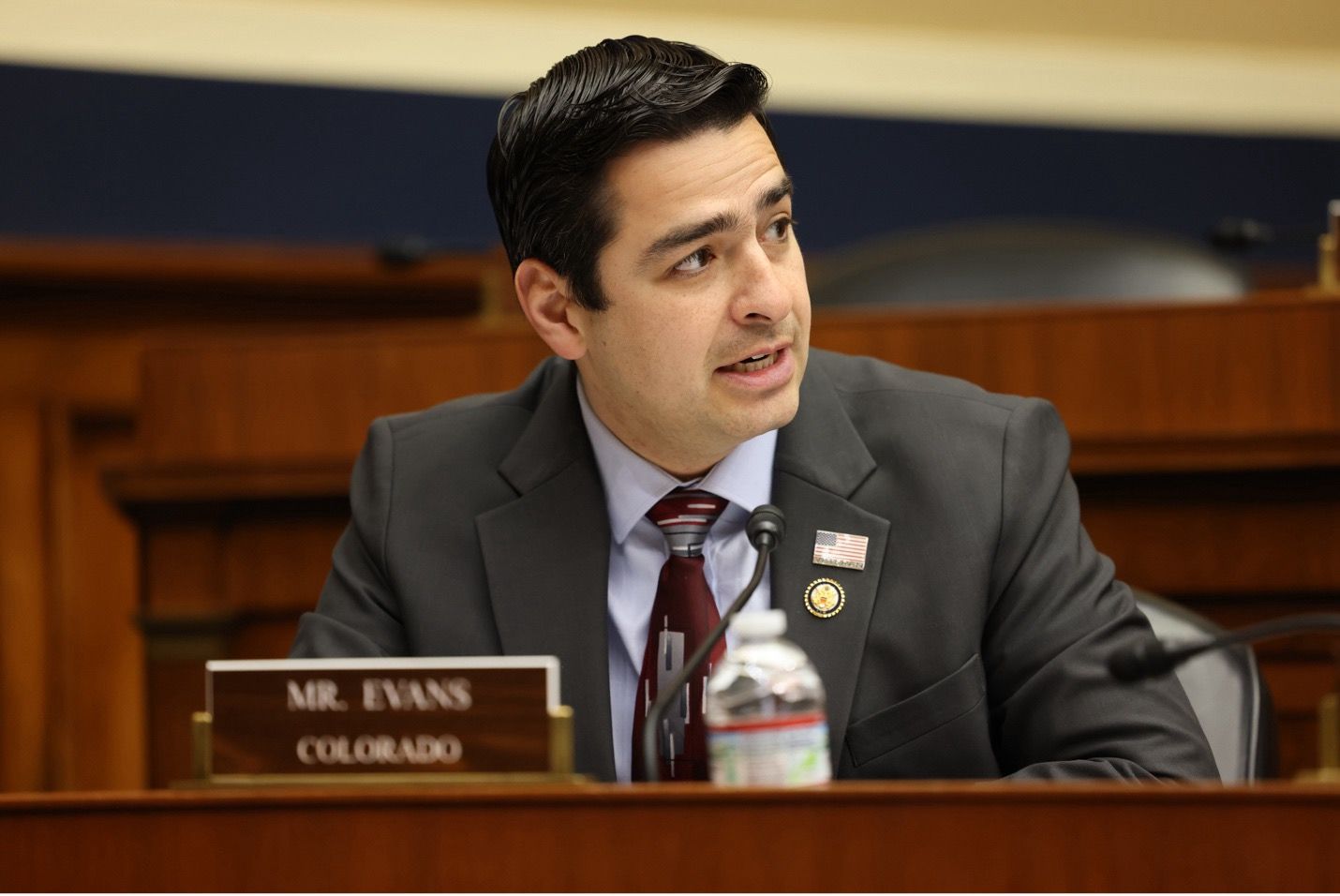
Evans FCMU.jpg

Congressman Gabe Evans (CO-08): “My commonsense bipartisan bill will help address a critical issue in western states that makes life less affordable for working families. My Fire Improvement and Reforming Exceptional Events Act, or FIRE Act, ensures that states like Colorado are not punished for smoke and emissions they can't control, while still maintaining strong environmental protections. We've heard the data, 70 percent of the emissions in Colorado originate from outside of the state's jurisdiction. This includes things like Canadian wildfires, Chinese pollution, and naturally occurring atmospheric events. But the resulting regulations that states like Colorado put onto industry and consumers are a leading cause of the affordability crisis facing families in my district.”
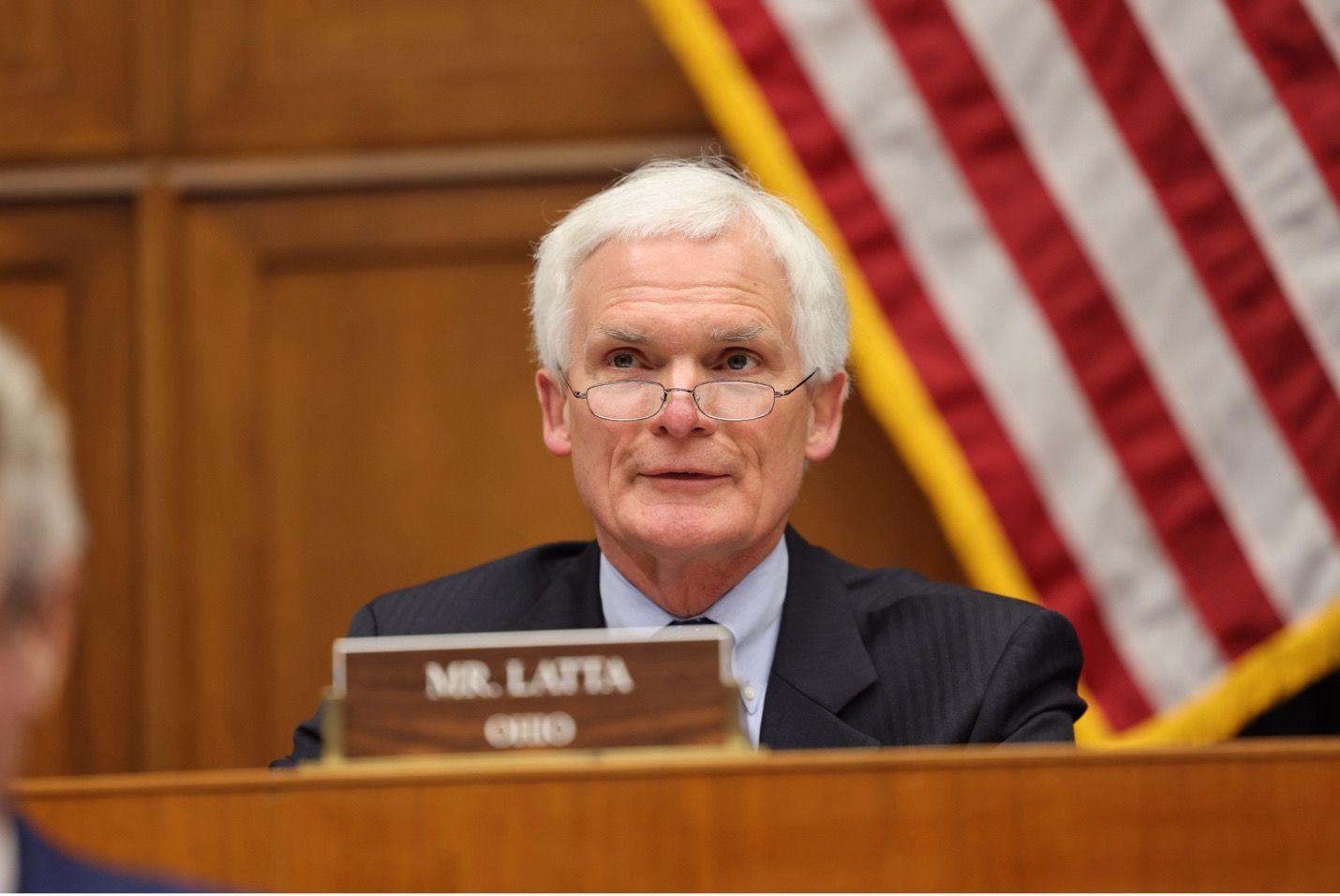
Latta FCMU.jpg

Congressman Bob Latta (OH-05): “H.R. 2072 will require the Federal Energy Regulatory Commission to extend the time period during which licensees are required to commence construction of certain hydropower projects. Hydropower is critical to part of our nation's energy mix, supplying power to approximately 30 million homes and businesses and accounting for 40 percent of our black start capacity, which means they can restart themselves without external power. The legislation requires the Federal Energy Regulatory Commission to extend the time period in which licensees are required to commence construction of relevant hydropower projects.”
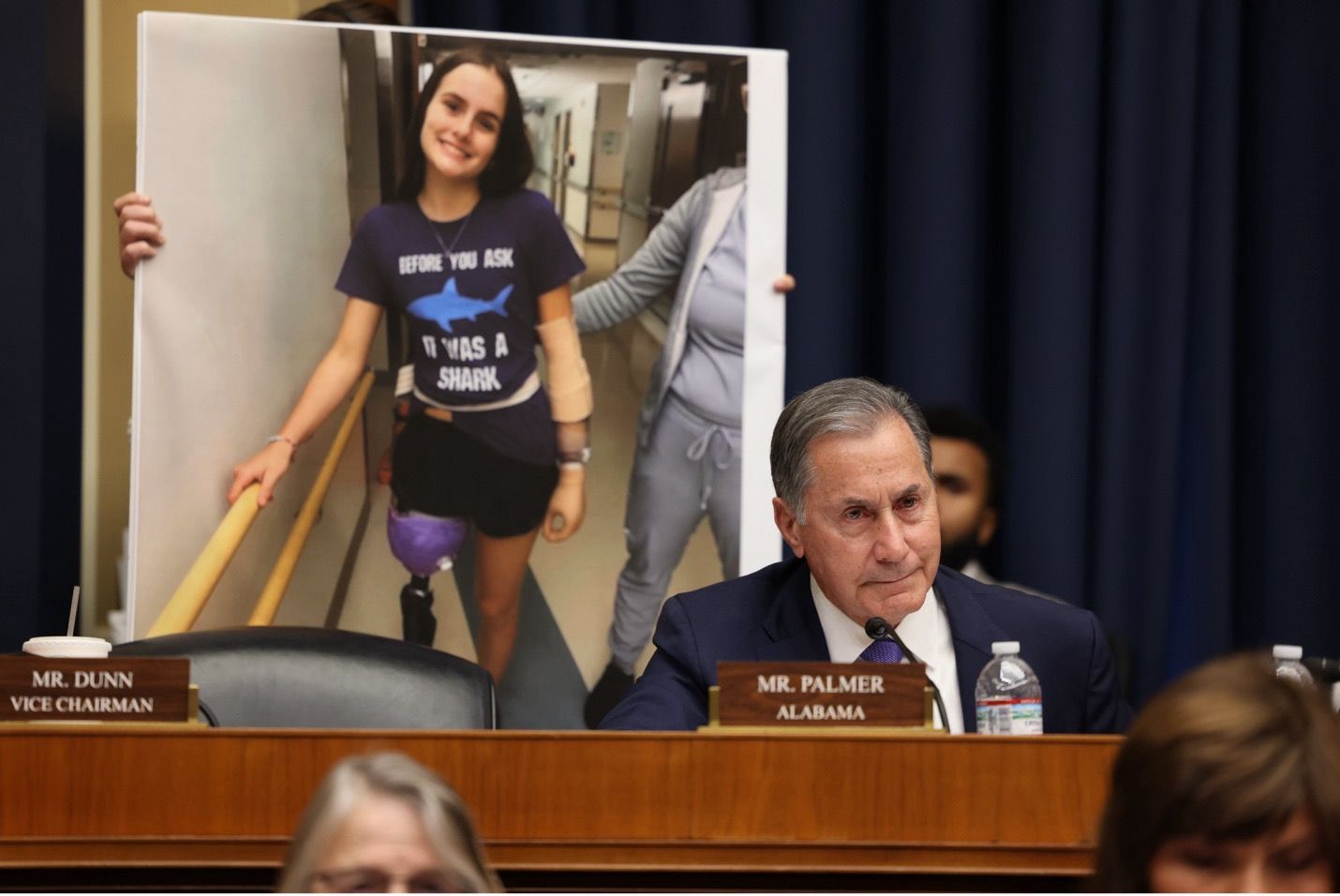
Palmer FCMU.jpg

Congressman Gary Palmer (AL-06): “Lulu's Law is named after Lulu Griffin who—at 15 years old—lost part of her left arm, her hand, and her right leg during a shark attack last year. Lulu's Law would enable authorities to quickly deploy wireless emergency alerts to the public if someone is attacked by a shark, or conditions for a shark attack are present nearby. About 90 minutes before Lulu was attacked, another woman about a mile down the beach had suffered critical injuries from the same shark. Passage of this bill will allow an alert system that will go out to cell phones to let people know to get their children out of the water, to get out of the water themselves in the event of a shark attack nearby.”


Dec 10, 2025
Environment

Chairman Palmer Delivers Opening Statement at Environment Subcommittee Markup

WASHINGTON, D.C . – Congressman Gary Palmer (AL-06), Chairman of the Subcommittee on Environment, delivered the following opening statement at today’s markup of seven bills. Subcommittee Chairman Palmer’s opening statement as prepared for delivery: “Welcome to today’s Environment subcommittee markup of seven (7) bills to improve the process for establishing and implementing the National Ambient Air Quality Standards and to streamline environmental reviews and the New Source Review pre-construction permitting program under the Clean Air Act. “No one questions that the Clean Air Act has been important in helping to improve air quality since the law was first enacted more than half a century ago. However, the law has not been significantly amended since 1990 and has not kept pace to meet the economic and security risks facing this country. “The commonsense permitting reforms contained in these seven bills are needed to improve the Clean Air Act so the United States can continue to be the world leader in economic prosperity, technological innovation, and environmental quality. “At subcommittee hearings in June and September, we heard testimony from several witnesses that the air quality standards for fine particulate matter and ozone that were issued by the Biden-Harris administration will stifle economic growth and be nearly impossible for states and regulated industries to meet because they are so close to background levels and that decisions on whether a state is meeting the standards should not be impacted by pollution caused by wildfires and from international sources outside of the state’s control. “We also heard testimony from top state environmental regulators that several of the deadlines in the Clean Air Act are impossible for EPA and states to implement. For example, several witnesses said it would make sense to extend the timeframe for reviewing air quality standards from every five years, as it is in current law, to every 10 years.  “We also heard testimony from multiple witnesses that the current pre-construction permitting and environmental review provisions of the Clean Air Act can slow down or even block construction of high-tech manufacturing and energy projects that we need more of in this country to win the race for critical minerals and advanced semiconductors against China. “The seven bills that we will be marking up are: “H.R. 6409, Foreign Emissions and Nonattainment Clarification for Economic Stability (FENCES) (Rep. Pfluger). This bill would clarify that foreign air pollution is not to be considered when deciding if a State or air district is meeting an air standard. “H.R. 4218, Clean Air and Economic Advancement Reform (CLEAR) Act (Rep. Carter) This bill makes several improvements to the process for establishing and implementing the air quality standards program under the Clean Air Act. "H.R. 4214, Clean Air and Building Infrastructure Improvement Act (Rep. Allen) This bill clarifies when a new air standard has to be factored into preconstruction permits under the Clean Air Act. “H.R. 161, New Source Review Permitting Improvement Act (Rep. Griffith) This bill clarifies what kind of construction or modifications of existing facilities would trigger permitting under the Clean Air Act. “H.R. 6373, Air Permitting Improvements to Protect National Security Act (Rep. Palmer) This bill would allow the President to waive the requirement that facilities that are critical to our national security – including critical mineral processing facilities -- offset emissions as part of the permitting process. “ H.R. 6398, Reducing and Eliminating Duplicative Environmental Regulations (RED Tape) Act (Rep. Joyce) This bill would streamline the environmental review and permitting process. “The passage of these bills will go a long way toward improving our infrastructure and making permitting more predictable and cost-effective. Some of these bills include ideas that we have considered in previous years, but some of them offer creative solutions based on feedback we have received. “I urge all of my colleagues to support these pieces of legislation, and I yield back.” ###


Dec 10, 2025
Press Release

Environment Subcommittee Advances Clean Air Act Permitting Bills to Full Committee

WASHINGTON, D.C. – Today, Congressman Gary Palmer (AL-06), Chairman of the Subcommittee on Environment, led a markup of several bills to reform permitting under the Clean Air Act. “No one questions that the Clean Air Act has been important in helping to improve air quality since the law was first enacted more than half a century ago. However, the law has not been significantly amended since 1990 and has not kept pace to meet the economic and security risks facing this country,” said Chairman Palmer. “The commonsense permitting reforms contained in these seven bills are needed to improve the Clean Air Act so the United States can continue to be the world leader in economic prosperity, technological innovation, and environmental quality.” Legislative Vote Summary: H.R. 6409 , the Foreign Emissions and Nonattainment Clarification for Economic Stability (FENCES) Act, was reported to the full committee, by a roll call vote of 14 Yeas to 11 Nays. H.R. 4218 , the Clean Air and Economic Advancement Reform (CLEAR) Act, was reported to the full committee, by a roll call vote of 14 Yeas to 10 Nays. H.R. 6387 , the Fire Improvement and Reforming Exceptional Events (FIRE) Act, was reported to the full committee, by a roll call vote of 13 Yeas to 10 Nays. H.R. 4214 , the Clean Air and Building Infrastructure Improvement Act, was reported to the full committee, by a roll call vote of 12 Yeas to 10 Nays. H.R. 161 , the New Source Review Permitting Improvement Act, was reported to the full committee, by a roll call vote of 12 Yeas to 11 Nays. H.R. 6373 , the Air Permitting Improvements to Protect National Security Act, was reported to the full committee, by a roll call vote of 12 Yeas to 10 Nays. H.R. 6398 , the Reducing and Eliminating Duplicative Environmental Regulations (RED Tape) Act, was reported to the full committee, by a roll call vote of 12 Yeas to 10 Nays. Watch the full markup here . Below are key excerpts from today’s markup: Congressman Buddy Carter (GA-01) on H.R. 4218, the Clean Air and Economic Advancement Reform (CLEAR) Act: “This is not about choosing between the environment and development. This is about common sense. We should not penalize states that are impacted by events out of their control, and they should not be penalized for taking action to prevent exceptional events. Georgia is a top state for business in America. It has been for 12 years. Even with our growth, Georgia's air has never been cleaner since monitoring began years ago. As our witnesses stated in legislative hearing we had on this bill, if we give our state officials the time they truly need to implement regulations, while also ensuring that they are not punished for background levels from natural sources, we can have lasting, meaningful policy and economic growth.” Congressman August Pfluger (TX-11) on H.R. 6409, the Foreign Emissions and Nonattainment Clarification for Economic Stability (FENCES) Act: “Back home in my district in the Permian Basin, we saw this play out recently when the Biden EPA floated a possible non-attainment designation that created real uncertainty. Even the hint of non-attainment sends a signal that permits could slow down, costs could rise, and long-term planning becomes harder for producers and communities alike at no fault of their own. That experience made it clear that these designations are too consequential to get wrong. Local communities should not be burdened by regulatory consequences tied to emissions that come from foreign sources or unavoidable natural events. The FENCES Act levels the playing field, sets the table for fairness, and it's about giving states regulatory certainty. It's about keeping American industries competitive while still upholding environmental standards.” Congressman John Joyce, M.D. (PA-13) on H.R.6398, the RED Tape Act: “This bill eliminates the requirement for the EPA to conduct a duplicative review and publicly comment on other agencies Environmental Impact Statements. This legislation keeps in place the initial environmental review required for federal projects and regulations under NEPA. It simply eliminates a bureaucratic and redundant secondary review that only serves to further delay the permitting and construction of critical projects. In order for America to remain competitive in the global economy, we must take steps to ensure timely and predictable outcomes for any new projects or regulations.” ###


May 24, 2023
Markups

E&C Advances Seven Bills to Close the Digital Divide and Improve American Leadership in Wireless Communications

In a Full Committee markup today, the Energy and Commerce Committee passed solutions that will streamline broadband permitting to expedite deployment and reauthorize the Federal Communications Commission’s Spectrum Auction Authority. Energy and Commerce Chair Cathy McMorris Rodgers (R-WA) on ensuring all Americans have access to reliable broadband services: ON CLOSING THE DIGITAL DIVIDE “High-speed broadband is an important part of our economy, yet many Americans, including in Eastern Washington, do not have access to reliable broadband. “In order to deploy broadband, providers need to go through burdensome permitting processes at the federal, state, and local level and the time to receive approval on a permit can range from several months to several years. “Our legislation would cut the red tape and ensure that this money can reach rural, unserved Americans quickly.” ON SPECTRUM “The Spectrum Auction Reauthorization Act would extend spectrum auction authority, make important changes to existing spectrum auction processes, and direct spectrum auction proceeds to fund critical programs. “This bill would promote our national security by providing $3.08 billion for our small communications providers to remove Huawei and ZTE from their networks. “It would authorize and fund Next Generation 9-1-1 technology to help our public safety officers and make sure Americans can reach emergency responders when they need it most. “Most importantly, this bill is a product of long bipartisan, bicameral negotiations, and I urge my colleagues to vote yes.” Communications and Technology Subcommittee Chair Bob Latta (R-OH): “The permitting bills we are considering today are an important step in ensuring that every American has access to high-speed broadband. “Since 2020, Congress has dedicated a record amount of money to support broadband deployment, culminating with Infrastructure Investment and Jobs Act. But spending is not enough. “The infrastructure law was a missed opportunity to enact meaningful permitting reform that is necessary to quickly build new networks. Today, we have the opportunity to fix that mistake.” Legislative Vote Summary: H.R. 3309 , the Standard Fees to Expedite Evaluation and Streamlining Act or the Standard FEES Act , sponsored by Reps. Gary Palmer and Patrick Ryan, was reported favorably, without amendment, to the House by a vote of 50-0. H.R. 3293 , the Expediting Federal Broadband Deployment Reviews Act , sponsored by Reps. Jeff Duncan and Angie Craig, was reported favorably, without amendment, to the House by a vote of 51-0. H.R. 3299 , the Deploying Infrastructure with Greater Internet Transactions and Legacy Applications Act or DIGITAL Applications Act , sponsored by Reps. Kat Cammack and Doris Matsui, was reported favorably, without amendment, to the House by a vote of 51-0. H.R. 3283 , the Facilitating the Deployment of Infrastructure with Greater Internet Transactions and Legacy Applications Act or Facilitating DIGITAL Applications Act , sponsored by Reps. Mariannette Miller-Meeks and Debbie Dingell, was reported favorably, without amendment, to the House by a vote of 51-0. H.R. 3343 , the Federal Broadband Deployment Tracking Act , sponsored by Reps. August Pfluger and Darren Soto, was reported favorably, without amendment, to the House by a vote of 51-0. H.R. 3565 , the Spectrum Auction Reauthorization Act of 2023 , sponsored by Reps. Cathy McMorris Rodgers and Frank Pallone, Jr., was reported favorably, as amended, to the House by a vote of 50-0. H.R. 3557 , the American Broadband Deployment Act of 2023 , sponsored by Rep. Buddy Carter, Nathaniel Moran, and Neal Dunn, was reported favorably, as amended, to the House by a vote of 27-23.


May 22, 2023
Markups

Chair Rodgers Announces Full Committee Markup of 19 Bills

Washington, D.C. — House Energy and Commerce Committee Chair Cathy McMorris Rodgers (R-WA) today announced a full committee markup of 19 bills. “The Energy and Commerce Committee is plowing the hard ground to improve people’s lives and raise their standard of living. This week, we are advancing solutions to lower health care costs and increase transparency, bolster American’s energy supply, and lift barriers that are hindering deployment of broadband. I’m thankful for all our members who are leading on bills and look forward to our work on Wednesday," said Chair Rodgers.   WHAT : A full committee markup of 19 bills.  DATE: Wednesday, May 24, 2023  TIME : 10:00 AM ET  LOCATION : 2123 Rayburn House Office Building  This notice is at the direction of the Chair. The markup will be open to the public and press and will be live streamed online at https://energycommerce.house.gov/ . If you have any questions concerning the markup, please contact Jolie Brochin at Jolie.Brochin@mail.house.gov .  For press related quotes regarding the Subcommittee on Health legislation, please contact Christopher Krepich at Christopher.Krepich@mail.house.gov . For press related questions regarding the subcommittees on Communications & Technology and Energy, Climate Change, and Grid Security, please contact Sean Kelly at Sean.Kelly@mail.house.gov .  Legislation to be considered: H.R. 1418 , the Animal Drug User Fee Amendments of 2023 , as amended by the Subcommittee on Health (Reps. Greg Pence and Kim Schrier) H.R. 2544 , the Securing the U.S. Organ Procurement and Transplantation Network Act (Reps. Larry Bucshon and Robin Kelly) H.R. 3561 , the Promoting Access to Treatments and Increasing Extremely Needed Transparency Act of 2023 or the PATIENT Act of 2023 (Reps. Cathy McMorris Rodgers and Frank Pallone Jr.)   H.R. 2666 , the Medicaid VBPs for Patients (MVP) Act , as amended by the Subcommittee on Health (Reps. Brett Guthrie and Anna Eshoo)    H.R. 3284 , the Providers and Payers COMPETE Act (Reps. Michael Burgess and Debbie Dingell)    H.R. 3290 , To amend title III of the Public Health Service Act to ensure transparency and oversight of the 340B drug discount program (Rep. Larry Bucshon)    H.R. 3285 , the Fairness for Patient Medications Act (Rep. Morgan Griffith)    H.R. 3309 , the Standard Fees to Expedite Evaluation and Streamlining Act or the Standard FEES Act (Reps. Gary Palmer and Patrick Ryan)   H.R. 3293 , the Expediting Federal Broadband Deployment Reviews Act (Reps. Jeff Duncan and Angie Craig)   H.R. 3299 , the Deploying Infrastructure with Greater Internet Transactions and Legacy Applications Act or DIGITAL Applications Act (Reps. Kat Cammack and Doris Matsui)   H.R. 3283 , the Facilitating the Deployment of Infrastructure with Greater Internet Transactions and Legacy Applications Act or Facilitating DIGITAL Applications Act (Reps. Mariannette Miller-Meeks and Debbie Dingell)   H.R. 3343 , the Federal Broadband Deployment Tracking Act (Reps. August Pfluger and Darren Soto) H.R. 3565 , the Spectrum Auction Reauthorization Act of 2023 (Rep. Cathy McMorris Rodgers and Frank Pallone, Jr.)  H.R. 3557 , the American Broadband Deployment Act of 2023 (Rep. Earl L. “Buddy” Carter, Nathaniel Moran, and Neal Dunn ) H.R. 1160 , the Critical Electric Infrastructure Cybersecurity Incident Reporting Act (Reps. Tim Walberg and Kim Schrier)    H.R. 3277 , the Energy Emergency Leadership Act (Reps. Tim Walberg and Lisa Blunt Rochester) H.R. 1042 , the Prohibiting Russian Uranium Imports Act , as amended by the Subcommittee on Energy, Climate, and Grid Security (Rep. Cathy McMorris Rodgers) H.R. 1640 , the Save Our Gas Stoves Act (Rep. Debbie Lesko) H.R. 1615 , the Gas Stove Protection and Freedom Act (Rep. Kelly Armstrong)


C&T Subcommittee Advances Seven Bills to Close the Digital Divide

Washington, D.C. — House Energy and Commerce Committee members yesterday advanced solutions during a Communications and Technology Subcommittee markup . The bills will help streamline the permitting process and deploy broadband faster and more effectively, which will help Americans get connected in communities across the country and close the digital divide. The Communications and Technology Subcommittee took action on the following bills: H.R. 3309 , the “Standard Fees to Expedite Evaluation and Streamlining Act” or the “Standard FEES Act” led by Reps. Gary Palmer (R-AL) and Patrick Ryan (D-NY) was referred to the full committee by voice vote. H.R. 3293 , the “Expediting Federal Broadband Deployment Act” led by Reps. Jeff Duncan (R-SC) and Angie Craig (D-MN) was referred to the full committee by voice vote. H.R. 3299 , the “Deploying Infrastructure with Greater Internet Transactions and Legacy Applications Act” or “DIGITAL Applications Act” led by Reps. Kat Cammack (R-FL) and Doris Matsui (D-CA) was referred to the full committee, without amendment, by voice vote. H.R. 3283 , the “Facilitating the Deployment of Infrastructure with Greater Internet Transactions and Legacy Applications Act” or the “Facilitating DIGITAL Applications Act” led by Reps. Mariannette Miller-Meeks (R-IA) and Debbie Dingell (D-MI) was referred to the full committee, without amendment, by a voice vote. H.R. 3343 , the “Federal Broadband Deployment Tracking Act” led by Reps. August Pfluger (R-TX) and Darren Soto (D-FL) was referred to the full committee without amendment by a voice vote. H.R. 3345 , led by Committee Chair Cathy McMorris Rodgers (R-WA) was referred to the full committee without amendment by voice vote. H.R. 3291 , the American Broadband Deployment Act, led by Reps. Buddy Carter (R-GA) and Nathaniel Moran (R-TX) was referred to the full committee, as amended, by a recorded vote of 16-12. Note: Many of the bills originally noticed were included in an Amendment in Nature of the Substitute to H.R. 3291 , the American Broadband Deployment Act. CLICK HERE to watch and learn more about the markup.


Mar 1, 2023
Energy

Subcommittee Markup Wrap up: E&C Republicans Advance Solutions to Unleash American Energy

Washington, D.C. — House Energy and Commerce Committee Republicans advanced 9 solutions during an Energy, Climate, and Grid Security Subcommittee markup and 7 solutions during an Environment, Manufacturing, and Critical Materials Subcommittee yesterday.   These Energy and Commerce bills unleash American energy, lower prices, and secure our supply chains. It’s just the beginning of our work on energy and climate solutions that reverse the damage done by President Biden’s agenda from day one to shut down our energy production and make us reliant on China.  The Energy, Climate, and Grid Security Subcommittee took action on the following bills:   The Securing America’s Critical Minerals Supply Act ( H.R. 1068 ) was forwarded by the subcommittee to the full committee, without amendment, by with a 15-8 roll call vote. This bill, led by Rep. Larry Bucshon (R-IN) strengthens America’s critical mineral supply by requiring the Department of Energy (DOE) to identify resources that are vulnerable to supply disruptions.  The Protecting American Energy Production Act ( H.R. 1121 ) was forwarded by the subcommittee to the full committee, without amendment, by a 16-8 roll call vote. The bill, led by Subcommittee Chair Jeff Duncan (R-SC) stops President Biden from issuing a moratorium on hydraulic fracturing so we flip the switch and unleash American energy production.  The Researching Efficient Federal Improvements for Necessary Energy Refining (REFINER) Act ( H.R. 1085 ) was forwarded by the subcommittee to the full committee, without amendment, by a 17-11 bipartisan roll call vote. The bill, led by Rep. Bob Latta (R-OH), will help lower gas prices by identifying ways to increase our refining capacity in the United States.  The Promoting Cross-border Energy Infrastructure Act ( H.R. 1058 ) was forwarded by the subcommittee to the full committee, as amended, by a 17-10 roll call vote. The bill, led by Rep. Kelly Armstrong (R-ND) increases North American energy security by reforming permitting for the construction of energy infrastructure projects across our borders.  A resolution disapproving of President Biden canceling Keystone XL ( H. Con. Res. 14 ) was forwarded by the subcommittee to the full committee, without amendment, by a 15-11 roll call vote. This resolution, led by Reps. Debbie Lesko (R-AZ) expresses disapproval for President Biden’s canceling of the Keystone XL pipeline and shutting down a project that was estimated to provide approximately 11,000 American jobs.  A resolution to Support America’s Energy Expansion ( H. Con. Res. 17 ) was forwarded by the subcommittee to the full committee, without amendment, by a 14-10 roll call vote. The resolution, led by Rep. Brett Guthrie (R-KY), expresses the sense of Congress that the Federal government should not impose any restrictions on the export of crude oil or other petroleum products.  The Unlocking Our Domestic LNG Potential Act ( H.R. 1130 ) was forwarded by the subcommittee to the full committee, as amended, by a 16-9 roll call vote. The bill, led by Rep. Bill Johnson (R-OH), cuts red tape surrounding the natural gas export permitting process, protects American jobs, unleashes homegrown American energy, helps our allies, and reduces emissions.  The Promoting Interagency Coordination for Review of Natural Gas Pipelines Act ( H.R. 1115 ) was forwarded by the subcommittee to the full committee, as amended, by a 13-8 roll call vote. The bill, led by Rep. Michael Burgess (R-TX), streamlines the permitting process for America to build more natural gas pipelines, which will restore American energy independence and improve our ability to get affordable natural gas to the communities that need it most.  The Critical Electric Infrastructure Cybersecurity Incident Reporting Act ( H.R. 1160 ), led by Reps. Tim Walberg (R-MI) and Kim Schrier (D-WA), was forwarded by the subcommittee to the full committee, without amendment, by a bipartisan voice vote.  The Environment, Manufacturing, and Critical Materials Subcommittee took action on the following bills:   A bill to streamline permitting for refining critical materials ( H.R. 1070 ) was forwarded by the subcommittee to the full committee, as amended, by a 13-6 roll call vote. The bill, led by Rep. Buddy Carter (R-GA) enhances America’s ability to develop critical energy resources by improving the hazardous waste permitting process at critical energy resource refining and processing facilities, which will help America develop its own supply of critical materials and ensure we aren’t relying on China for key energy resources.  A bill to cut red tape for critical energy resource facilities ( H.R. 1131) was forwarded by the subcommittee to the full committee, without amendment, by a 13-6 roll call vote. This bill, led by Rep. John Joyce (R-PA), helps eliminate China’s influence in America’s energy supply chains and strengthens our capacity to develop critical materials here at home by requiring the Administrator of the Environmental Protection Agency to authorize the use of flexible air permitting and cut red tape for operations at critical energy resource facilities.    A bill to unlock critical energy materials ( H.R. 1140 ) was forwarded by the subcommittee to the full committee, without amendment, by a roll call vote of 13-6. The bill, led by Rep. Greg Pence (R-IN), secures our energy supply chains and bolsters our national and energy security by authorizing the Administrator of the Environmental Protection Agency to waive applications of certain requirements for processing and refining of critical energy materials.     The Elimination of Future Technology Delays Act ( H.R. 1158 ) was forwarded by the subcommittee to the full committee, without amendment, by a 13-6 roll call vote. The bill, led by Rep. John Curtis (R-UT), s trengthens domestic production of critical materials and cuts our reliance on the Chinese Communist Party improving EPA review and determinations practices to encourage innovation in critical materials.  The Natural Gas Tax Repeal Act ( H.R. 1141 ) was forwarded by the subcommittee to the full committee, without amendment, by a 13-7 roll call vote. The bill, led by Rep. August Pfluger (R-TX), repeals President Biden’s harmful natural gas tax that is hurting American families and increasing household energy bills across the country.  A bill to repeal the Democrat’s climate bank ( H.R. 1023 ) was forwarded by the subcommittee to the full committee, without amendment, by a 11-6 roll call vote. The bill, led by Rep. Gary Palmer (R-AL), rolls back a $27 billion “green bank”—a slush fund for the Democrat’s political allies that lacks any accountability to taxpayers. It’s the largest single grant program in the Democrats’ massive spending bill, the so-called Inflation Reduction Act.  The Keeping America’s Refineries Act (H.R. 1155 ) was forwarded by the subcommittee to the full committee, without amendment, by a 10-6 roll call vote. The bill, led by Rep. Dan Crenshaw (R-TX), stops the Biden administration’s efforts to phase out gasoline and internal combustion engines, which makes energy more expensive and forces America to be dependent on dirty supply chains that are controlled by China.