News

Oversight & Investigations Updates


Feb 3, 2026
Hearings

O&I Subcommittee Holds Hearing on Ongoing Fraud in Medicare and Medicaid Programs

WASHINGTON, D.C. – Today, Congressman John Joyce, M.D. (PA-13), Chairman of the Subcommittee on Oversight and Investigations, led a hearing titled Common Schemes, Real Harm: Examining Fraud in Medicare and Medicaid.

“What’s happening in Minnesota’s Medicaid program is deeply concerning and requires robust Congressional oversight; however, it is just the tip of the iceberg,” said Chairman Joyce. “Medicare and Medicaid fraud has been occurring in communities across the U.S. for decades, diverting necessary resources from patients in need. It is our duty to protect these programs for our most vulnerable Americans.”

Watch the full hearing here.

Below are key excerpts from today's hearing:
LH1A0870.JPG

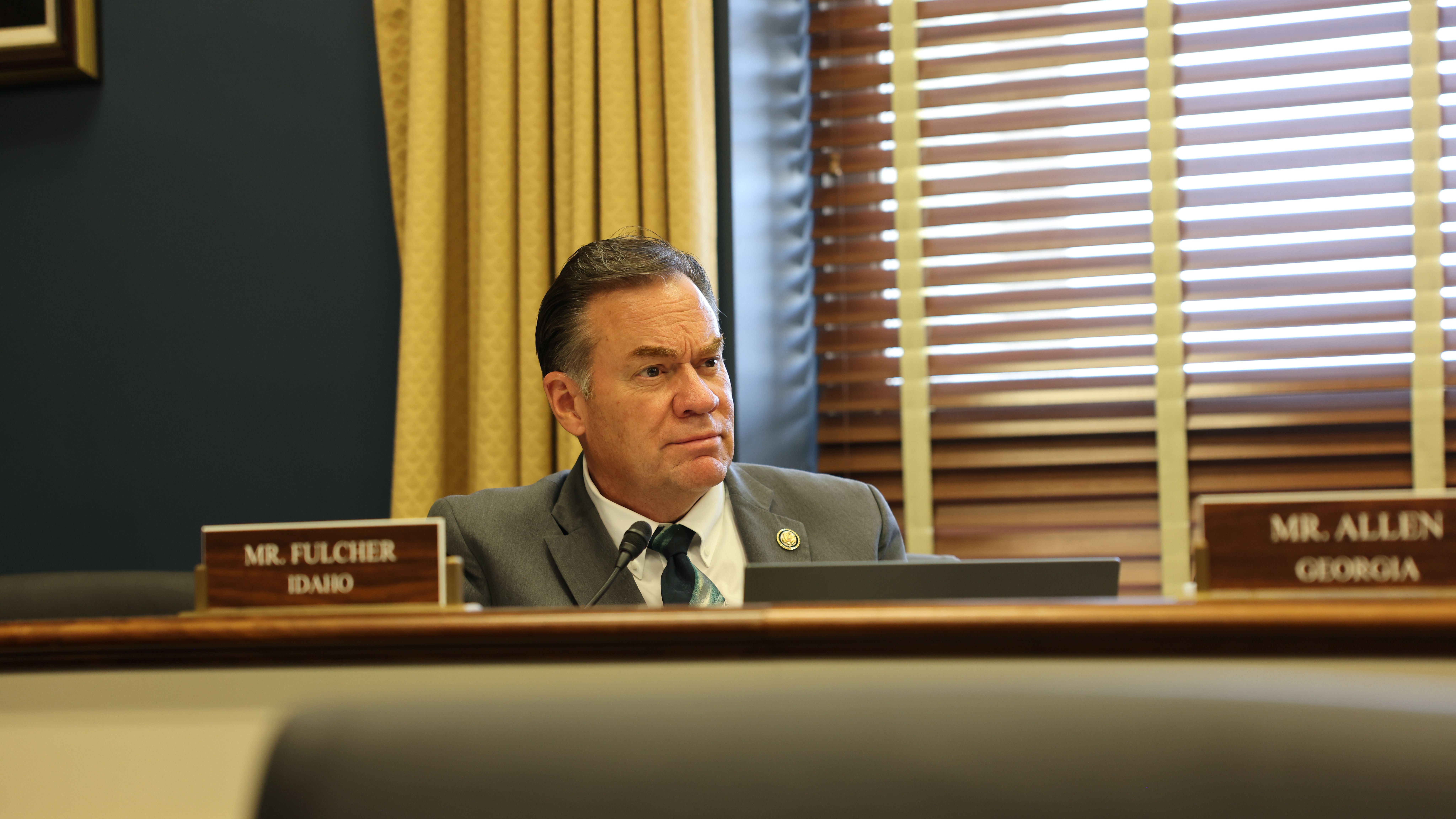
Congressman Russ Fulcher (ID-01): “I’m from the state of Idaho—which, sometimes, may not be the first state you think about when there might be fraud, but that is kind of the basis of my question. Have you noticed any trends where states might get targeted or regions might get targeted as a function of potentially them having a lower barrier for entry, or maybe perceived as not being as likely to be audited?” Ms. Gay: “Absolutely. We talk a lot in the industry how [fraud] can be regionally generated. It tends to start in one particular area, and then I don’t know if they’re all hanging out, talking to each other, or how that spreads, but it does tend to start in certain populations and then branch out from there based on controls.” Mr. Fulcher: “What if the bad actor is a foreign actor? How much of that do you see? And if so, what kind of a challenge does that bring to potentially pursuing that fraud, if it’s perpetrated by a foreign actor?” Ms. Wooten: “Certainly, states have seen both fraud cases perpetrated by foreign and by U.S. citizens or people in the U.S., and from our perspective, as being a Medicaid Fraud Control Unit, it makes no difference. We look at allegations, try to identify whether there is something we can do about them? Is the dollar amount something we can pursue? Are we going to be able to get value back for the Medicaid program? Do we have the laws in place to prosecute whatever type of fraud is referred? And we move forward with that investigation.”
LH1A1035.JPG

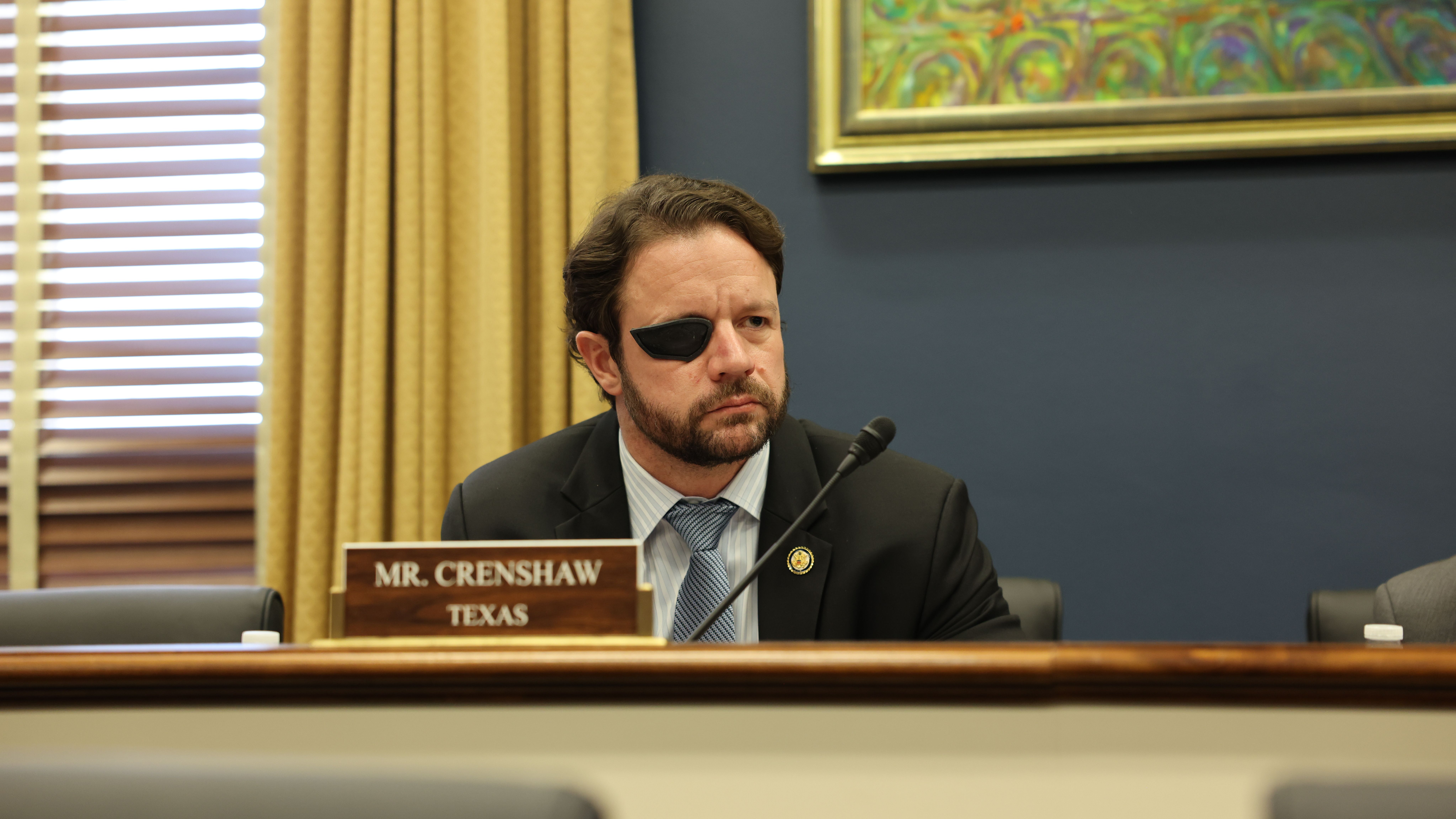
Congressman Dan Crenshaw (TX-02): “So what’s the solution here? I mean, some argue stronger oversight would actually threaten access to care, but based on your experience, what actually happens to access when fraud is not controlled? Who bears the brunt of this?” Ms. Gay: “I think there’s certainly the patient-harm attribute you mentioned—you know, not getting the care that you need. […] We dealt with some cases with ACA enrollments, and by the time we verified with CMS that those were eligible recipients, the health plan was already on the hook for $1, $2, $3 million. Were these patients even receiving the care? In some cases, yes. In other cases, they had no idea that they were in a facility for such treatment. […] Now you have somebody that doesn’t even have that challenge, but that is now on their record. And even worse—those that do, that are getting subpar treatment at a very exorbitant rate and still not getting better.”
LH1A1129.JPG

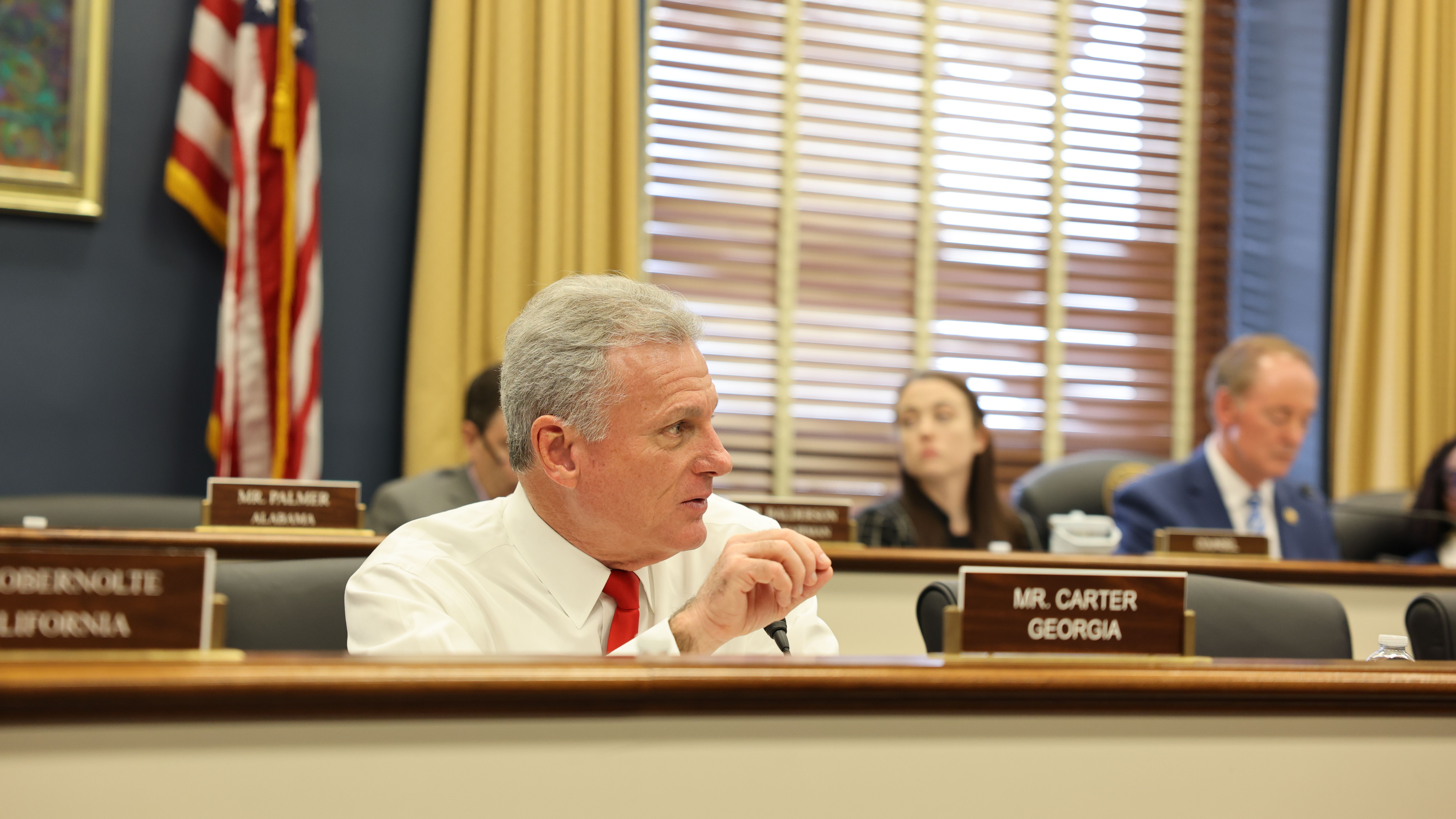
Congressman Buddy Carter (GA-01): “Auditors found 112 hospice providers operating out of a single physical address. 112...holy cow. As a result, hospice agencies in LA County alone likely overbilled Medicare by $105 million in just one year. […] It looks like it’s a problem in a lot of different places. And that’s why I want to ask you, Ms. Wooten, have you seen instances of copycats where fraudsters see a successful fraud scheme happening in one location, so they try to replicate the same fraud elsewhere?” Ms. Wooten: “Absolutely. We definitely see replicated fraud schemes in hospices; an excellent example. I share your concerns about home health and hospice because I owned a home health agency for many years, and I didn’t even choose to be a hospice because there were specialized agencies that could handle that part, and we would refer to them under the right circumstances. What we now see, though—hospices who are admitting patients who are not terminally ill, patients who don’t know they were put on hospice, patients who maybe aren’t getting treatments that they need, because the hospice philosophy, as you know, is for comfort care, not for treating illnesses. We have seen the same thing in Utah that the hospices have exploded. Now, I’m not saying they’re all fraudulent either, but absolutely; fraudsters learn from fraudsters and it’s an area we have to investigate.”


Jun 18, 2025
Press Release

Chairman Guthrie Requests More Information on Improperly Shared User Data by California’s Health Insurance Marketplace Website

WASHINGTON, D.C. – Congressman Brett Guthrie (KY-02), Chairman of the House Committee on Energy and Commerce, along with Reps. Palmer (AL-06), Carter (GA-01), Bilirakis (FL-12), and Obernolte (CA-23), penned a letter to the Executive Director of Covered California (CoveredCA), Jessica Altman, to request further information related to the potentially unauthorized transmission of sensitive personal health information involving Covered California’s website. Key Letter Excerpt: “According to public reports and agency statements, tracking technology was embedded on Covered California's website beginning in February 2024, as part of a broader digital advertising effort, and in direct contravention of the tracking platform’s user agreement, which prohibits the use of such tools on pages that collect sensitive health information. Although the tags were reportedly removed in April 2025, following external scrutiny and a vendor transition, the extended period of data exposure raises serious questions about the adequacy of safeguards that Covered California had in place. Forensic testing by investigative reporters identified the trackers in operation and confirmed that user-entered health information was being transmitted to third parties without consent. These circumstances warrant examination of Covered California’s actions under federal privacy standards.” “Ensuring the confidentiality of health information is a foundational obligation for entities operating within the health insurance ecosystem. Federal privacy protections, particularly the Health Insurance Portability and Accountability Act (HIPAA), establish expectations for how covered organizations handle sensitive data. Recent reports and public filings raised questions about whether those expectations were met in this case, and whether existing oversight mechanisms are sufficient to detect and prevent improper disclosures.” Background: Forensic testing shows Covered California —the State of California’s official health insurance marketplace—has been sending sensitive user health data to third-party websites through several online data trackers. Prior to removal of the trackers, CoveredCA had more than 60 trackers active on its website; the average number of trackers on a government website is three. Some types of information sent to such websites include: Searches for doctors in network with specific plans/specializations Demographic information, including gender, ethnicity, and marital status Length of treatment a patent received by a provider Frequency of doctor visits If the user indicated they were blind, pregnant, a victim of domestic abuse, or used prescription medications. The State of California independently operates CoveredCA. As the state’s official ACA marketplace, CoveredCA falls under the purview of Health Insurance Portability and Accountability Act (HIPAA). The disclosure of information such as pregnancy or prescription drug use without proper consent—even for “marketing purposes”—may violate HIPAA. This Congress, the Committee has sent letters to 23andMe and DeepSeek over potential data privacy concerns: The Committee also held a hearing last Congress on the Change Healthcare hack, where personal health information was also jeopardized. CLICK HERE to read Fox News coverage of the letter. CLICK HERE to view the full letter. ###


Dec 19, 2024
Press Release

E&C Republicans Request HHS Watchdog Investigate Promotion of Gender Transition Procedures for Children

Washington, D.C. — In a new letter to Department of Health and Human Services (HHS) Inspector General Christi Grimm, House Energy and Commerce Committee Republicans requested an investigation into the strength, quality, and types of evidence-based scientific and pediatric medical literature relied on by the department to promote gender transition procedures for children.  KEY LETTER EXCERPT:  “As the agency responsible for safeguarding the health and well-being of Americans, all of HHS’s medical treatment recommendations, especially medical treatment recommendations for children, should be based on rigorous and well-established research, such as randomized controlled trials, that have definitively illustrated the long-term benefits of gender affirming care treatments.”  BACKGROUND:  Under the Biden administration, HHS has advocated for sex reassignment procedures on minors, including the use of serum puberty blockers, which have historically been used to treat children with precocious puberty (i.e., early onset puberty affecting about one percent of U.S. children) and sex offenders.   Puberty blockers, however, are known to stunt normal childhood development in children unaffected by precocious puberty.  HHS officials contend that sex reassignment procedures on minors are an unanimously accepted medical practice.  HHS Secretary Becerra testified before Congress that “every major medical association,” “medical journals,” and “scientific and medical evidence” has demonstrated the benefits of transitioning children’s biological sex.  When asked, via a Freedom of Information Act request, for the underlying scientific or medical basis for its position, HHS was only able to produce a two-page brochure that was already publicly available.  In contrast to HHS, a growing body of literature from medical experts and authorities around the world, including those in Europe, caution against performing such procedures on minors.   Courts and government health agencies responsible for determining child welfare have sought to limit child sex reassignment procedures.   Other countries have banned these interventions and surgeries on minors altogether.  An article published in the British Journal of Medicine found “there is great uncertainty about the effects of puberty blockers, cross-sex hormones, and surgeries in young people.”   A court in the United Kingdom noted the obvious about administering puberty blocking chemicals onto children: “[i]t is highly unlikely that a child aged 13 or under would be competent to give consent to the administration of puberty blockers. It is doubtful that a child aged 14 or 15 could understand and weigh the long-term risks and consequences of the administration of puberty blockers.”  In April 2024, the Cass Review , an independent review of gender identity services for children and young people, commissioned by the National Health Service England, found “[w]hile a considerable amount of research has been published in this field, systematic evidence reviews demonstrated the poor quality of the published studies, meaning there is not a reliable evidence base upon which to make clinical decisions, or for children and their families to make informed choices.”   The Cass Review also found that “[t]he rationale for early puberty suppression remains unclear, with weak evidence regarding the impact on gender dysphoria, mental or psychosocial health,” as well as unknown effects on cognitive and psychosexual development.  In August 2024, the American Society of Plastic Surgeons (ASPS) became the first major U.S. medical association to express caution on the use of gender surgery for gender dysphoria in adolescents. In its formal statement, the association stated: “ASPS currently understands that there is considerable uncertainty as to the long-term efficacy for the use of chest and genital surgical interventions for the treatment of adolescents with gender dysphoria, and the existing evidence base is viewed as low quality/low certainty. This patient population requires specific considerations.”   The letter was signed by Committee Chair Cathy McMorris Rodgers (R-WA), Subcommittee on Health Chair Brett Guthrie (R-KY), Subcommittee on Oversight and Investigations Chair Morgan Griffith (R-VA), Rep. Dan Crenshaw (R-TX), Rep. Gus Bilirakis (R-FL), Rep. Buddy Carter (R-GA), Rep. Gary Palmer (R-AL), Rep. Neal Dunn (R-FL), Rep. Randy Weber (R-TX), Rep. Troy Balderson (R-OH), Rep. August Pfluger (R-TX), Rep. Diana Harshbarger (R-TN), and Rep. Kat Cammack (R-FL).  CLICK HERE to read the letter.


Nov 4, 2024
Press Release

E&C Republican Staff Report Details Cronyism within Biden-Harris EPA’s Multibillion-Dollar Environmental Justice Grant Programs

Washington, D.C. — In a newly released staff report , House Energy and Commerce Committee Republicans detail how the Biden-Harris Environmental Protection Agency (EPA) is in the process of spending nearly three billion taxpayer dollars on so-called “environmental justice” (EJ) grants. The report uncovers how EJ grants were given to radical environmental activist groups that attempt to exert political influence, engage in progressive election activities, and are backed by billionaires. Committee Chair Cathy McMorris Rodgers (R-WA), Subcommittee on Oversight and Investigations Subcommittee Chair Morgan Griffith (R-VA), and Subcommittee on Environment, Manufacturing, and Critical Materials Chair Earl L. “Buddy” Carter (R-GA) issued the following statement: "It couldn’t be more clear: The Biden-Harris administration rewards its environmental special interests at the expense of the American people. As part of its radical rush-to-green agenda, the administration gave hundreds of millions of taxpayer dollars to activists who also engage in political activities. It was empowered to do so by congressional Democrats who jammed through legislation that was designed to rush money out the door as quickly as possible with no guards against waste, fraud, and abuse. Equally as alarming is how these policies benefit the Chinese Communist Party—the world’s worst polluter." BACKGROUND : Passed by congressional Democrats and signed into law by President Biden in 2022, the Inflation Reduction Act (IRA) more than quadrupled the EPA’s budget. Included in that deluge of spending was nearly three billion dollars in EJ grants to be administrated through a variety of programs. One program relies upon a “pass-through” model, which hands $600 million taxpayer dollars out to 11 “grant makers” to then dole out to additional recipients—a process that lacks serious oversight protections. The report exposes how the Biden-Harris EPA funneled public funding to groups that exert political influence, engage in election activities, express anti-Republican sentiment, espouse radical progressive ideologies, and already receive significant funding from wealthy donors.  KEY REPORT EXCERPTS :  Simply put, the EPA is awarding taxpayer dollars to special interest groups committed to a radical energy agenda to “educate” others and drive public outreach, as well as assist those it engages with to influence government policymaking and outcomes. One might consider it akin to a taxpayer-funded lobbying operation. Given these organizations’ existing efforts to sway public opinion, they may use these awards to attempt to indoctrinate members of the communities in which they conduct outreach. [...] Under its EJTCTAC Program, the EPA awarded $10,000,000 to West Harlem Environmental Action, Incorporated (WE ACT) to operate a technical assistance center, the WE ACT Technical Assistance Collaborative. WE ACT lists “[f]ighting [l]iquified [n]atural [g]as and [f]alse [s]olution [i]nfrastructure” among its 2024 policy priorities. It has called on federal agencies to halt new or expanded liquified natural gas operations and vows to continue this “advocacy campaign.” Notably, the Biden-Harris Administration announced a pause on exports of liquified natural gas in January 2024. [...] Some selectees and partners appear to have clear political bias. The Climate Justice Alliance, selected to be a National Grantmaker under the EJTCGM Program issued a press release implying congressional Republicans deserved blame for a potential government shutdown in 2023. EJTCTAC Program selectee WE ACT posted a blog criticizing “Republican gas stove culture wars,” and House GOP Members’ “performative, out-of-touch agenda.” The New York Immigration Coalition, an EJTCGM Program partner, accused the Trump administration of preventing people from voting. Another partner, the Wyoming Outdoor Council, attacked the Trump administration’s “environmental rollbacks” and stated it would “successfully defend the good rules and regulations put in place by the prior administration.” Healthy Gulf urged on its website, “we must ensure that the federal government reinstates common sense, safety, and environmental oversights that the Trump administration rolled back.” CLICK HERE to read the full report. 


Sep 17, 2024
Press Release

Committee Staff Report Exposes Failures in Biden-Harris EPA’s Electric School Bus Program

Washington, D.C. — The House Energy and Commerce Subcommittee on Oversight and Investigations today released a new staff report titled “Majority Staff Report: Examining the Environmental Protection Agency’s Electric School Bus Program.” House Energy and Commerce Committee Chair Cathy McMorris Rodgers (R-WA), Subcommittee on Oversight and Investigations Chair Morgan Griffith (R-VA), and Subcommittee on Environment, Manufacturing, and Critical Materials Chair Earl L. “Buddy” Carter (R-GA) released the following quote about the report’s findings:   “It is clear the $5 billion Clean School Bus Program is overall a failure and, in many cases, a waste of Americans’ hard-earned taxpayer dollars. The program, led by the radical Biden-Harris EPA, props up a market that relies heavily upon a supply chain dominated by the Chinese Communist Party. Further, the program was constructed without the necessary safeguards to prevent fraud and incentivizes schools to use buses they otherwise would not choose. It’s also important to note that the EPA refuses to tell us how many of these school buses are on the road. As the official tasked with ensuring the success of the program, Vice President Harris bears great responsibility for its significant shortcomings.”  The Chairs also added,  “We commend EPA Inspector General Sean O’Donnell for his assistance in our investigation as well as his own work as the EPA’s watchdog.”  OVERVIEW OF REPORT :  Executive Summary    Introduction to the Clean School Bus Program   Creation of the Clean School Bus Program  2022 Clean School Bus Rebate Program  2023 Clean School Bus Grant Program  2023 Clean School Bus Rebate Program  Concerns with Electric School Buses   Cost   Environmental Impact  Battery Production   Battery Recycling   Increased Risk of Fires  Performance  ESB Supply Chains  National Security  Human Rights Issues in the Supply Chain  Problems with the Clean School Bus Program   Lack of Verification Procedures Leads to Waste, Fraud and Abuse   Delay Issues  Program Imbalance  Conclusion   Appendix   OVERVIEW OF INVESTIGATION :  September 13, 2023 : Subcommittee on Oversight and Investigations convenes hearing titled "Making the Grade?: Audit of the Environmental Protection Agency’s Clean School Bus Program"  October 31, 2023 : Subcommittee on Oversight and Investigations sends first round of surveys to school districts participating in the Clean School Bus Program.  January 9, 2024 : House Energy and Commerce Committee Chair Cathy McMorris Rodgers (R-WA) issues statement after the Environmental Protection Agency (EPA) announced an additional $1 billion in grants for President Biden’s electric school bus plan  April 5, 2024 : E&C Republicans Press EPA for Information on Clean School Bus Program that Picks Winners and Losers  September 17, 2024 : E&C Republicans Release Staff Report on Clean School Bus Program


Aug 19, 2024
Press Release

E&C Republicans Expand Oversight of EPA’s $27 Billion Green Bank

Washington, D.C. — In a new letter to the Environmental Protection Agency (EPA), Energy and Commerce Committee Republicans are pressing for answers regarding Greenhouse Gas Reduction Fund (GGRF) awards. The letter to Administrator Regan, signed by Committee Chair Cathy McMorris Rodgers (R-WA), Subcommittee on Oversight and Investigations Chair Morgan Griffith (R-VA), and Subcommittee on Environment, Manufacturing, and Critical Materials Chair Earl L. "Buddy" Carter (R-GA), requests an unredacted copy of all GGRF award agreements that have been finalized.  It follows up on an Oversight Subcommittee hearing from earlier this year, where Mr. Zealan Hoover, Senior Advisor to the Administrator, assured Committee Members that the award agreements that EPA entered into with recipients to receive GGRF program awards would address the concerns raised.   LETTER TEXT BELOW:   Dear Administrator Regan,  We write to you as part of the Energy and Commerce Committee’s (the Committee) continued oversight of the Environmental Protection Agency’s (EPA) Greenhouse Gas Reduction Fund (GGRF). As you know, Committee Members have many questions regarding this first-of-its-kind, $27 billion program, including those discussed at a January 30, 2024, Subcommittee on Oversight and Investigations hearing on the GGRF, with Mr. Zealan Hoover, Senior Advisor to the Administrator, testifying on behalf of the EPA. In numerous instances, Mr. Hoover assured Members that the award agreements that EPA would enter into with recipients that the EPA selected to receive GGRF program awards would address the concerns they raised.   For example, in response to a question from Committee Chair Rodgers about what conflicts of interest policies would govern funding recipients responsible for further distributing this money, Mr. Hoover responded that “they will be subject to all of the terms and conditions of their financial assistance agreement.” After Representative Guthrie pressed for more information on whether organizations with foreign ties could receive GGRF funding, Mr. Hoover stated that “one of the terms and conditions in each of the award agreements is going to be a prohibition against entering into any form of contractual relationship with a foreign entity of concern.” Mr. Hoover also replied to Representative Lesko, “[e]ach grantee is applying with a rigorous investment plan, proposed project pipeline, and timeline for a wide array of necessary activities covering their investment work, their governance, their organizational structure. All of that will be enshrined in our terms and conditions of the grant agreement.”   Members also submitted follow-up questions for the record after the hearing. Oversight and Investigations Subcommittee Chair Griffith requested more detail about performance audits, and the EPA responded, in part, “[w]e expect that the terms and conditions of GGRF grants, as provided in 2 C.F.R. § 200.208, will authorize the project officer to closely monitor recipient performance and compliance with grant requirements.” Additionally, in response to Chair Griffith’s inquiry on how the EPA could evaluate the past performance of applicants that included new organizations or coalitions, the EPA stated that it required applicants to submit risk management plans, and that awardees would have to comply with specific terms and conditions in their award agreements. In response to a question on Build America, Buy America Act (BABA) compliance, the EPA stated that it was “including terms and conditions in the award agreements to reinforce that all grants are subject to [BABA] by statute,” and that “EPA will hold selected applicants accountable to BABA requirements through the terms and conditions of the award agreements.” Finally, the EPA also responded to a question from Representative Crenshaw, saying that “EPA will include a term and condition in all award agreements to protect against federal funds flowing to entities with certain connections to the People’s Republic of China.”  In short, the EPA repeatedly sought to reassure the Committee that its award agreements with selected recipients would address the issues of concern and potential risks. The Committee seeks additional detail on how these award agreements will address the issues of concern and potential risks.    As such, please provide a complete and unredacted copy of the award agreement, including all of the attachments, appendices, and any amendments, that the EPA executes with each funding recipient under the GGRF. By no later than August 29, 2024, please provide a copy of all award agreements that have been finalized as of the date of this letter, and please provide a copy of all remaining agreements as soon as they are finalized. 


May 3, 2024
Blog

What We Learned: Change Healthcare Cyber Attack

Americans deserve to have their sensitive health information protected. Energy and Commerce Republicans have been actively working since the February 21st cyberattack on Change Healthcare to understand how it happened, how it can be prevented in the future, and how to help Americans continue to access care.  THE PROBLEM Change Healthcare is one of the largest health payment processing companies in the world. It acts as a clearing house for 15 billion medical claims each year—accounting for nearly 40 percent of all claims. The cyberattack that occurred in February knocked Change Healthcare—a subsidiary of the behemoth global health company UnitedHealth—offline, which created a backlog of unpaid claims. This has left doctors’ offices and hospitals with serious cashflow problems—threatening patients’ access to care. It has since come to light that millions of Americans may have had their sensitive health information leaked onto the dark web, despite UnitedHealth paying a ransom to the cyber attackers. E&C ACTION From the outset, Members on Energy and Commerce have been working with the administration and Change Healthcare to help providers—particularly smaller and rural practices—maneuver through the new, complicated process of getting reimbursed, so they could keep their doors open and focus on caring for patients. Energy and Commerce Republicans were briefed by the Administration for Strategic Preparedness and Response, the Centers for Medicare and Medicaid Services, and Change Healthcare in the weeks following the attack. Following the briefings, bipartisan Energy and Commerce leaders wrote to UnitedHealth seeking answers about the attack. The Subcommittee on Health convened a hearing on May 17th to explore cybersecurity vulnerabilities in the health care sector and discuss possible solutions to address them. This week, the Oversight and Investigations Subcommittee called UnitedHealth CEO Sir Andrew Witty to explain to the American people what happened in the lead up to and during the attack, how the company is responding, and how it plans to prevent such an attack from happening again. WHAT WE LEARNED 1. The attack occurred because UnitedHealth wasn’t using multifactor authentication [MFA], which is an industry standard practice, to secure one of their most critical systems.  Mr. Witty:   We're continuing to investigate as to exactly why MFA was not on that particular service. It clearly was not. I can tell you I'm as frustrated as you are about having discovered that and as we've gone back and figured out how this situation occurred.    Change Healthcare came into the organization toward the end of 2022 after the timing of the declarations you just described.    Change Healthcare was a relatively older company with older technologies, which we had been working to upgrade since the acquisition. For some reason, which we continue to investigate, this particular server did not have MFA on it.   2. It’s estimated that a third of Americans had their sensitive health information leaked to the dark web as a result of the attack.  Oversight Subcommittee Chair Morgan Griffith: "Substantial proportion of the American population." What does that mean? How much are we talking? 20 percent? We talking 50 percent? We're talking 70? Tell us.   Mt. Witty:   Chairman, we continue to investigate the amount of data involved here. We do think it's going to be substantial. Because we haven't completed the process, I'm hesitant to be overly precise on that and and be wrong in the future. I wouldn't like to mislead anybody in that regard.   Chair Griffith:   Well, and I wouldn't want you to mislead us either. But when you say "substantially," at least give me some kind of a range. You can be on the bottom to high. I don't mind giving you a range. Are we talking 20 to 50?   Mr. Witty:   I think maybe a third or somewhere of that level.   3. This might not be the end of the leaks. Despite UnitedHealth paying a ransom to the criminals, it cannot guarantee that more of Americans’ sensitive information will not be leaked.  Chair Cathy McMorris Rodgers:   How were the hackers communicating with UnitedHealth to get the ransom? Did you communicate ever directly with the hackers?   Mt. Witty:   I did not. No. Chair Rodgers:   How much did you pay in ransom? And how was it paid it? In dollars? Bitcoin or other cryptocurrency?   Mr. Witty:   $22 million in Bitcoin.  Chair Rodgers:   What was the date that you paid the ransom?   Mr. Witty:   I'm sorry. I don't have that to mind. But I can certainly get back to you with that.   Chair Rodgers:   Can you affirmatively say that the hackers you paid did not make copies of protected or personal data and then, at a later date, uphold it onto the internet or the dark web.   Mr. Witty:   I cannot affirmatively say that. No. 4. UnitedHealth has resources to help individuals and providers.  Dr. Burgess:   Is there a generally available website or telephone number that a practice can call right now, if they're continuing to have a problem?  Mr. Witty: Yes. And thank you very much for the question. So [ https://support.changehealthcare.com/ ] is the best website for anybody to access, whether it being a provider or an individual.    But, also I would very much like to note the 1-800 number that's available for individuals to call if they have any questions at all about data or anything like that.    So, it's 1 (866) 262-5342. That service line is available and makes available very quickly is a very simple process. If anybody wants things like credit protection, identity theft protection, those services are all available to be enrolled on just through a simple phone call.   CLICK HERE to watch the full hearing. Check out some of the news coverage from the hearing: UnitedHealth’s handling of the situation will probably be “a case study in crisis mismanagement for decades to come,” said Rep. Cathy McMorris Rodgers (R-Wash.), chair of the House Energy and Commerce Committee.  Witty fielded heated questions from Senators on the House Energy and Commerce Committee about the company's failure to prevent the breach and contain its fallout.  Pressed for details on the data compromised, Witty said "maybe a third" of Americans' protected health information and personally identifiable information was stolen.  Members of the House Energy and Commerce Committee asked Witty why the nation's largest health care insurer did not have the basic cybersecurity safeguard in place before the attack. "Change Healthcare was a relatively older company with older technologies, which we had been working to upgrade since the acquisition," Witty said. "But for some reason, which we continue to investigate, this particular server did not have MFA on it."  Rep. Gary Palmer (R., Ala.), in an afternoon hearing held by the House Energy and Commerce Committee’s subcommittee on Oversight and Investigations, pressed Witty on how many government employees with security clearance were included in the breach. That kind of theft would be a national-security risk, he said.  Still, Rep. Earl L. “Buddy” Carter, R-Ga., railed against the company’s use of vertical integration, in which it has acquired physician practices, pharmacy benefit managers and other players in the health care system. “Let me assure you that I’m going to continue to work to bust this up,” Carter said.“This vertical integration that exists in health care in general has got to end.”  Several members also took the opportunity to chide United Healthcare’s use of prior authorization, which Witty said resumed for its Medicare Advantage plans April 15.   The company should “carefully review how that prior authorization” has affected patient outcomes, said Rep. John Joyce, R-Pa. 


Apr 30, 2024
Press Release

E&C Republicans Press NIH to Confirm Agency Isn’t Funding Russian Research

Washington, D.C. — House Energy and Commerce Committee Chair Cathy McMorris Rodgers (R-WA), Subcommittee on Health Chair Brett Guthrie (R-KY), and Subcommittee on Oversight and Investigations Chair Morgan Griffith (R-VA), on behalf of the Health and Oversight Subcommittee Republicans, wrote to National Institutes of Health (NIH) Director Monica Bertagnolli. In the letter, the Chairs ask the NIH to confirm by May 14, 2024, whether the agency has complied with White House guidance to stop funding projects led by researchers and entities in Russia.  BACKGROUND :  On June 11, 2022, the White House Office of Science and Technology Policy (OSTP) issued guidance stating such projects and programs that commenced and/or were funded prior to Russia’s further invasion of Ukraine in February 2022 may be concluded, but new projects in affected subject areas will not be initiated.   The OSTP advised applicable departments and agencies to curtail interaction with the leadership of Russian government-affiliated universities and research institutions, as well as those who have publicly expressed support for the invasion of Ukraine.  In a statement in an April 9, 2023, article in The Washington Times , the NIH’s Office of Extramural Research claimed that “NIH currently does not fund any research in Russia.”  However, the Data Abyss tracker for the OSTP Russia guidance on federal funding agencies indicates that, as of April 5, 2024, the NIH has potentially 240 instances of problematic research collaborations since June 2022 that do not comply with the guidance. CLICK HERE to read the letter.


Apr 17, 2024
Press Release

E&C Republicans Expand Investigation into Sexual Harassment at NIH to now Include Review of HHS Office of Civil Rights Compliance Role

Washington, D.C. — House Energy and Commerce Committee Chair Cathy McMorris Rodgers (R-WA), Subcommittee on Health Chair Brett Guthrie (R-KY), and Subcommittee on Oversight and Investigations Chair Morgan Griffith (R-VA), on behalf of the Health and Oversight Subcommittee Republicans, wrote to Department of Health and Human Services (HHS) Secretary Xavier Becerra.  The letter outlines concerns with the role HHS Office of Civil Rights (OCR) plays—or fails to play—in investigating instances of sexual harassment that occurs at research institutions which receive grants from the National Institutes of Health (NIH).  KEY EXCERPTS :  “There have been several public reports of sexual harassment occurring on NIH-funded research or NIH-supported activities over the last decade, and it raises concerns about what, if any, actions the NIH has taken to resolve these issues. The NIH’s own statistics show a significant problem with more than 300 cases related to sexual or gender harassment since 2018—with about a third of those allegations being substantiated. This also represents hundreds of men and women who may be forced to operate in a hostile or unsafe research environment.”  [...]  “According to the HHS website, OCR does investigate and resolve complaints of sexual harassment in the education and health programs of recipients of grants or other federal financial assistance from HHS—including the NIH. Moreover, HHS OCR is required to conduct periodic compliance reviews of institutional Title IX programs to ensure compliance with the law—including examining the way in which complaints are handled by the institution.”  The Chairs have requested answers to questions about HHS OCR’s role by April 30, 2024.  BACKGROUND :  Based on a recommendation from the U.S. Government Accountability Office (GAO), HHS OCR and the NIH adopted a memorandum of understanding (MOU) to facilitate communication between the two components of HHS as it relates to sexual harassment.   This MOU was intended to clarify procedures on how the enforcement arm of HHS and the grant-making arm share valuable information with one another in an effort to respond appropriately to complaints of sexual harassment and prevent federal grant money from going to those with a history of sexual misconduct.   TIMELINE OF INVESTIGATION :  August 10, 2021 : E&C Republican Leaders Question NIH’s Handling of Sexual Harassment Complaints  August 11, 2022 : E&C Republican Leaders follow up with NIH on Insufficient Response to its Letter on the NIH’s handling of Sexual Harassment  November 30, 2022 : E&C Republicans to NIH: Turn Over Previously Requested Information Ahead of New Congress  March 14, 2023 : E&C Republicans Press NIH for Information on Handling of Sexual Harassment Complaints  October 6, 2023 : E&C Republicans Signal Intent to Issue Subpoenas to Obtain Information on NIH’s Handling of Sexual Harassment if Questions Go Unanswered  January 26, 2024 : Chair Rogers notifies NIH of Imminent Subpoena  February 5, 2024 : Chair Rodgers Subpoenas NIH for Documents Related to Investigation into Sexual Harassment at NIH and NIH Grantee Institutions February 20, 2024: HHS Responds on behalf of NIH to offer a rolling in camera document review to the Committee. Documents produced in the review have been highly redacted, including the redaction of the names of individuals convicted of criminal offenses, public news articles about individuals who have been found guilty of harassment, and redaction of the names of the institutions where the abuse occurred—effectively preventing the Committee from understanding if NIH continues to fund work performed by substantiated abusers at other institutions—a practice known as “pass the harasser.”